Quantum space community lands in Singapore
CQT co-hosted the two-day Workshop on Quantum Technologies on Small Satellites for 40 participants
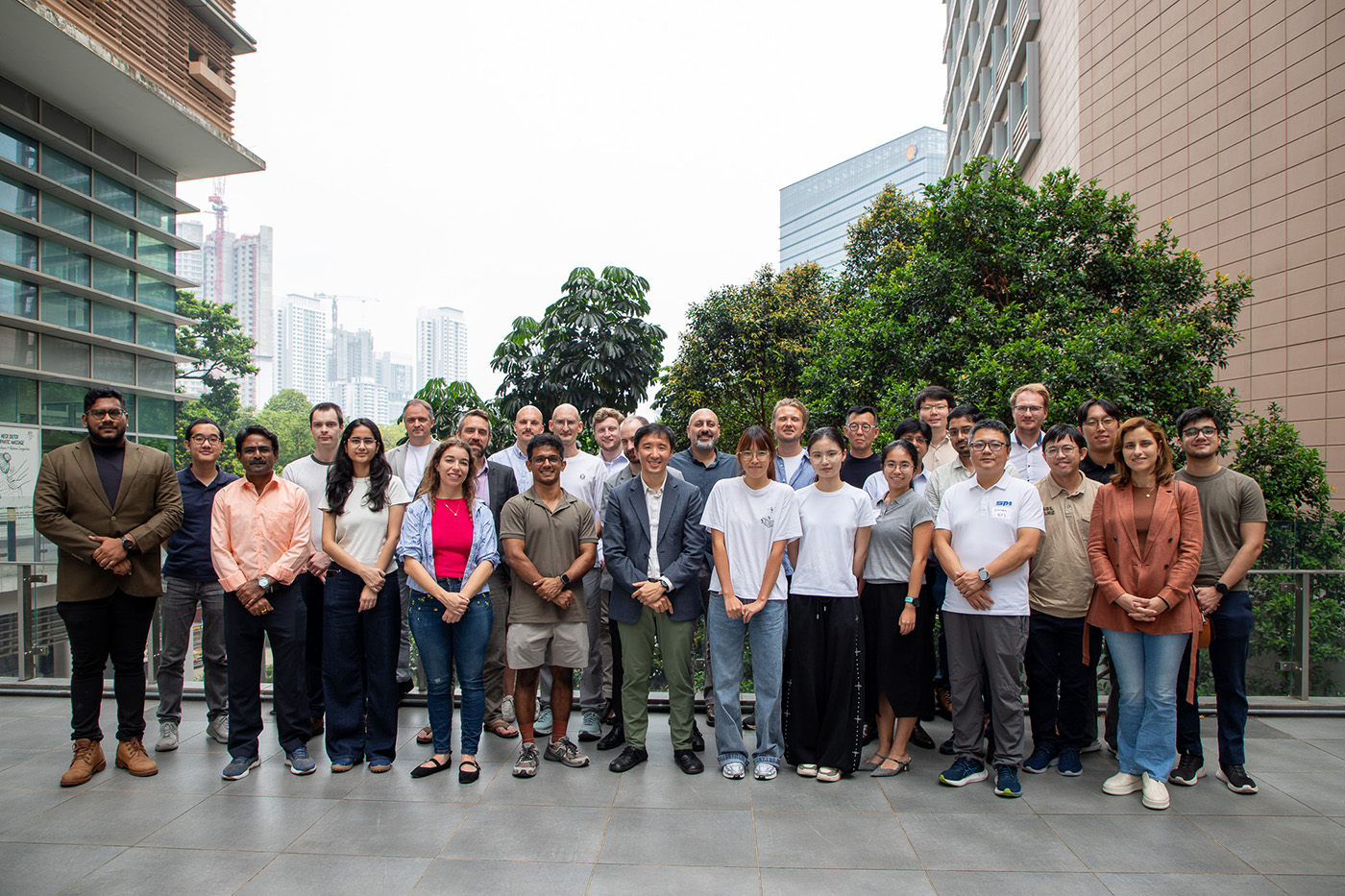
Talks at QTX-9 covered quantum missions, optical ground segments, and new frontiers for quantum technologies in space.
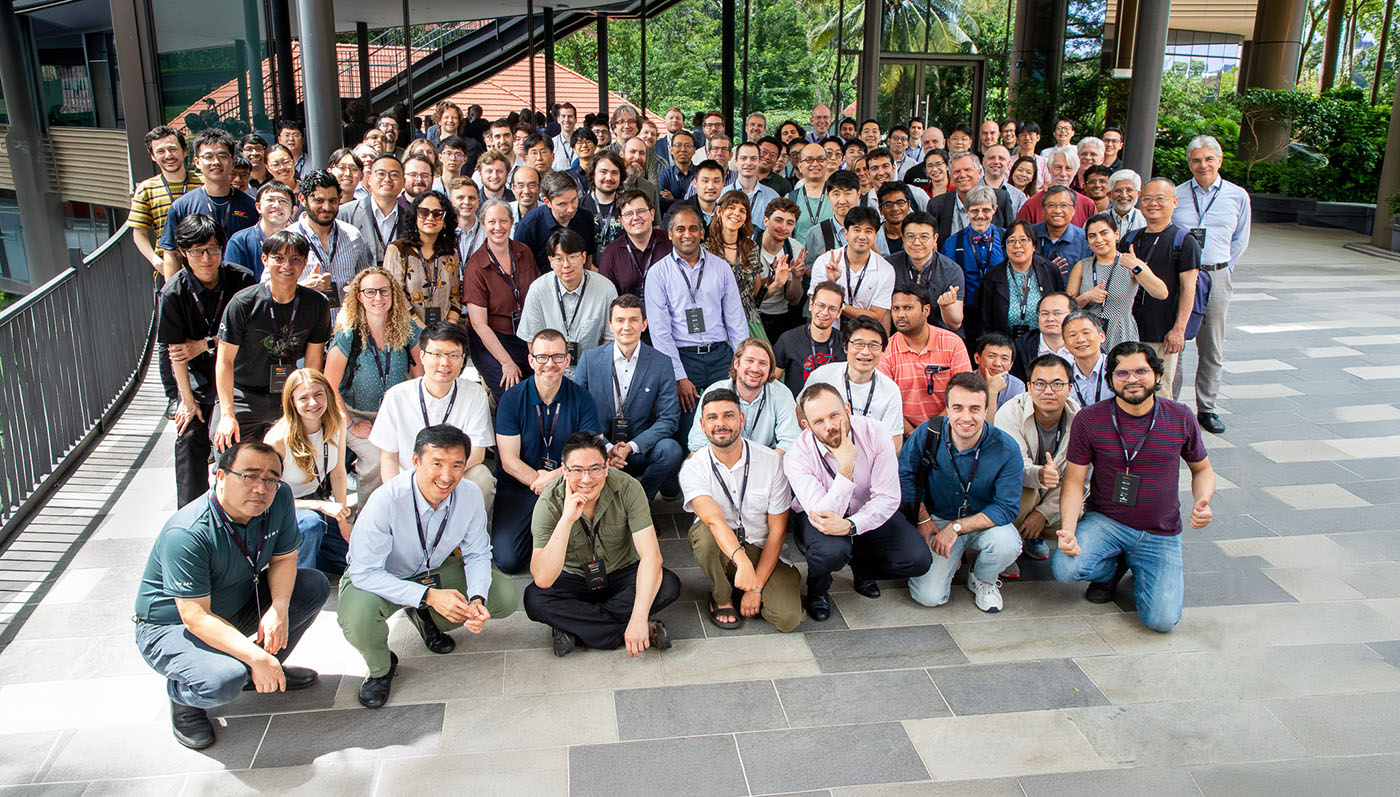
Some 40 researchers met in Singapore on 19 and 20 October to talk about putting quantum technologies in space. They were invited delegates of the ninth Workshop on Quantum Technologies on Small Satellites (known as QTX-9).
The workshop was first held in Singapore in 2018 and has since convened in Germany, the United Kingdom and the United Arab Emirates. Its programme focuses on satellite technologies and quantum experiments in space – both space-based and ground architectures, from component through to mission design.
CQT Principal Investigator Alexander Ling and Markus Krutzik of Humboldt-Universität zu Berlin and Ferdinand-Braun-Institut, Leibniz-institut für Höchstfrequenztechnik, are the QTX co-organisers.
“When we started the workshop years ago, it was to get the community together and get people excited to test how we can get things to space,” said Alexander, who is also Professor in the Physics Department at the National University of Singapore, in his opening remarks. “Now we can be more ambitious. There’s a lot of things we can do, especially if we are talking about building a global quantum network,” he said.
Mission updates
Attendance at the workshop is limited by design. The event had just 13 invited talks across four sessions covering quantum missions, optical ground segments, and new frontiers for quantum technologies in space.
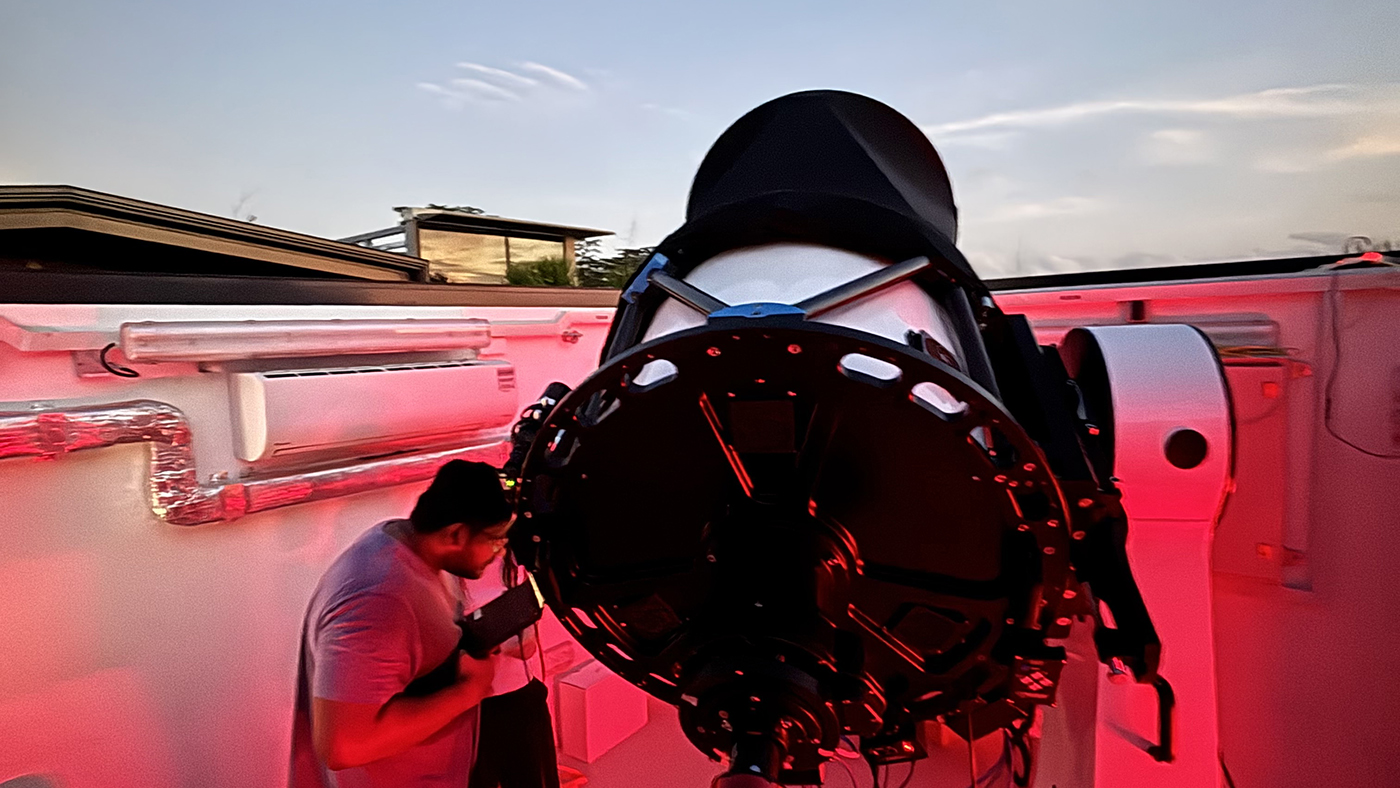
Two talks showcased Singapore research. Robert Bedington, co-founder and Chief Technology Officer of CQT spin-off company SpeQtral, gave an update on the company’s SpeQtre mission launched in 2025 in partnership with UK’s RAL Space. SpeQtral took over operational control the satellite in July 2026. The company’s team is now commissioning the quantum payload and doing testing with optical ground stations (OGS), including the OGS in Singapore operated by CQT.
Shaik Abdillah, a CQT PhD student, gave a talk about work at the Singapore OGS. He spoke about its specifications and design, as the first station to be built in an equatorial climate and operated in a densely populated urban environment, and about the team’s background noise characterisation.
A few speakers gave updates on quantum missions. Tobias Vogl from the Technical University of Munich presented results from the QUICK3 space mission. The quantum nanosatellite has tested the Born rule, a fundamental quantum physics principle, and hyper-complex quantum mechanics in a microgravity environment. Meanwhile, Liam Ramsey from University of Illinois Urbana-Champaign presented on the SEAQUE mission. SEAQUE is testing a waveguide-based entangled photon source to create and verify entanglement, and the use of quantum annealing to combat radiation damage. Both speakers had previously presented plans for the missions at QTX-8.
A gathering amongst friends
Shaik was also the chair for the talk sessions and served as a member of the local organising committee. “The workshop is meant to be small and intimate, a gathering amongst friends as Prof Alexander says, to allow people to discuss informally for good ideas to emerge,” he said.
He organised local lab tours as a programme extra. The participants visited the OGS, the National Quantum-Safe Network testbed and Alexander’s lab where the team is building quantum memories for networking.
Next year’s QTX is already being planned. The workshop will mark its tenth anniversary in Munich.