Workshop for Quantum Repeaters and Networks held in Singapore
The workshop’s first time in Asia since the series started in 2015
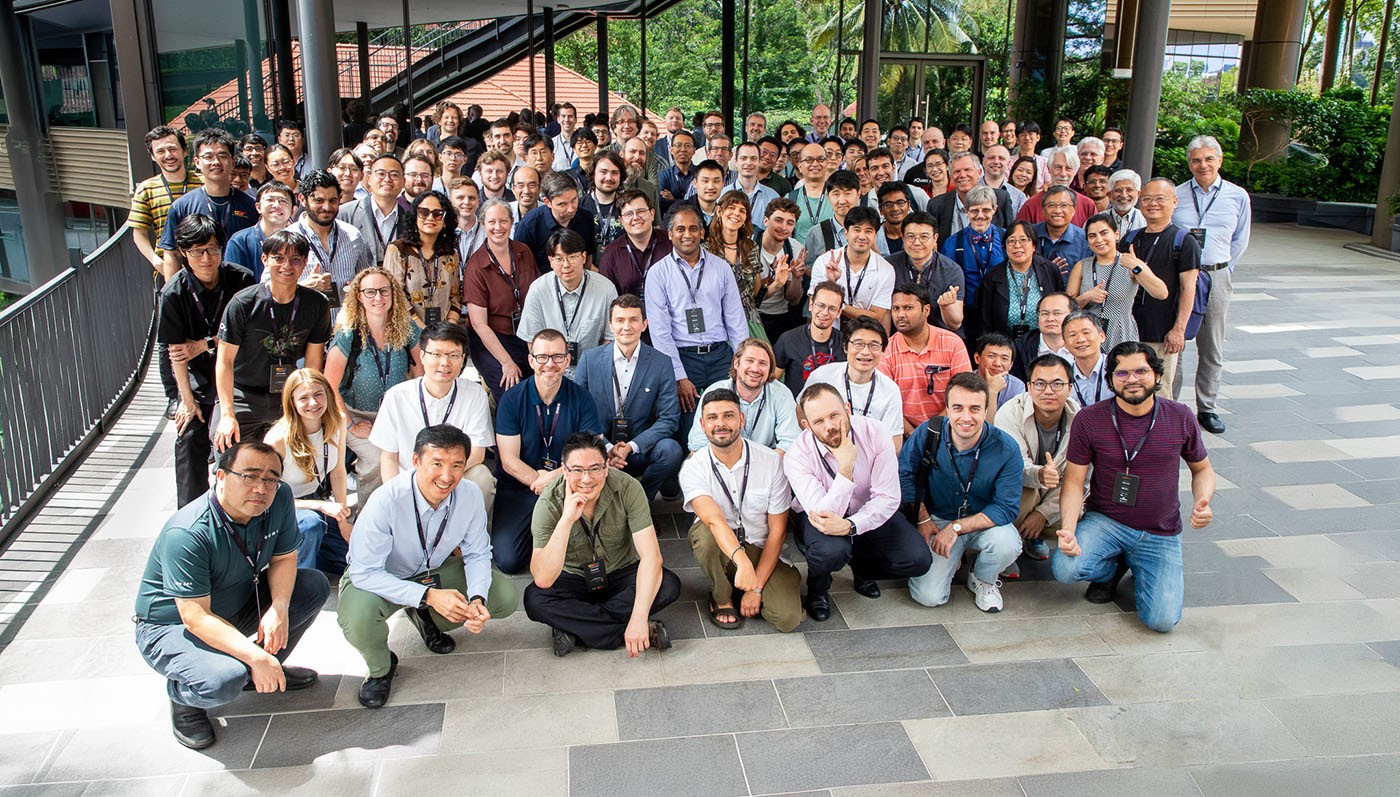
International researchers working on quantum networks and repeaters assembled in one place for the fifth WQRN.
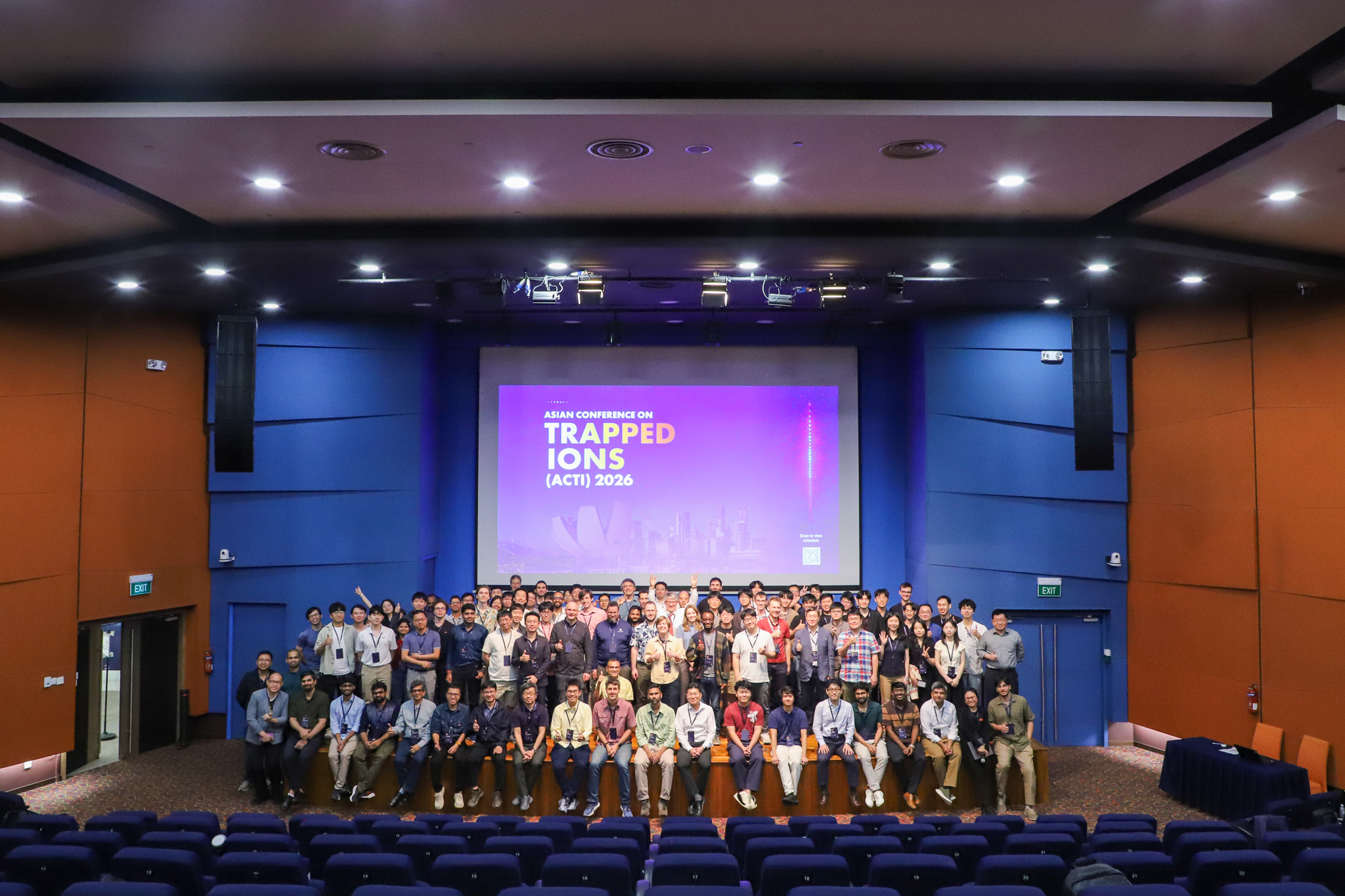
Their goal is to build quantum networks that span the globe, but the 100 researchers who gathered in Singapore on 27-29 April still find value in being in one room. They were delegates invited to attend the fifth Workshop for Quantum Repeaters and Networks (WQRN5), the workshop making its first stop in Asia since the series started in 2015.
Over the three-day workshop, participants discussed the progress, challenges and possible directions for the field. Large multi-node quantum networks hold promise for secure communication. They could also enable more useful quantum sensors and clocks and allow quantum computers to scale. Quantum repeaters are key to enhancing the range and quality of signals travelling through the network.
“Distributing quantum information is still fiendishly difficult. This Workshop brings together an international cast of experts. By supporting and learning from one another, we can lay the groundwork faster for making quantum technologies more widely available,” says CQT Principal Investigator Alexander Ling, who is the chair of the local organising committee. “Like the internet today makes information and compute accessible, a quantum network could enable more useful and powerful quantum devices, as well as improve access.”
CQT is the host of WQRN5. Previous editions were held in the United States of America, Austria and Switzerland.
WQRN5 was supported by the Dieter Schwarz Foundation, Singapore’s Infocomm Media Development Authority, IonQ, ID Quantique, Munich Quantum Instruments, Qubitrium and Sparrow Quantum.
Quantum and classical
The event’s schedule featured seven sessions, with topics ranging from quantum repeaters and quantum network components to architectures and worldwide quantum network efforts.
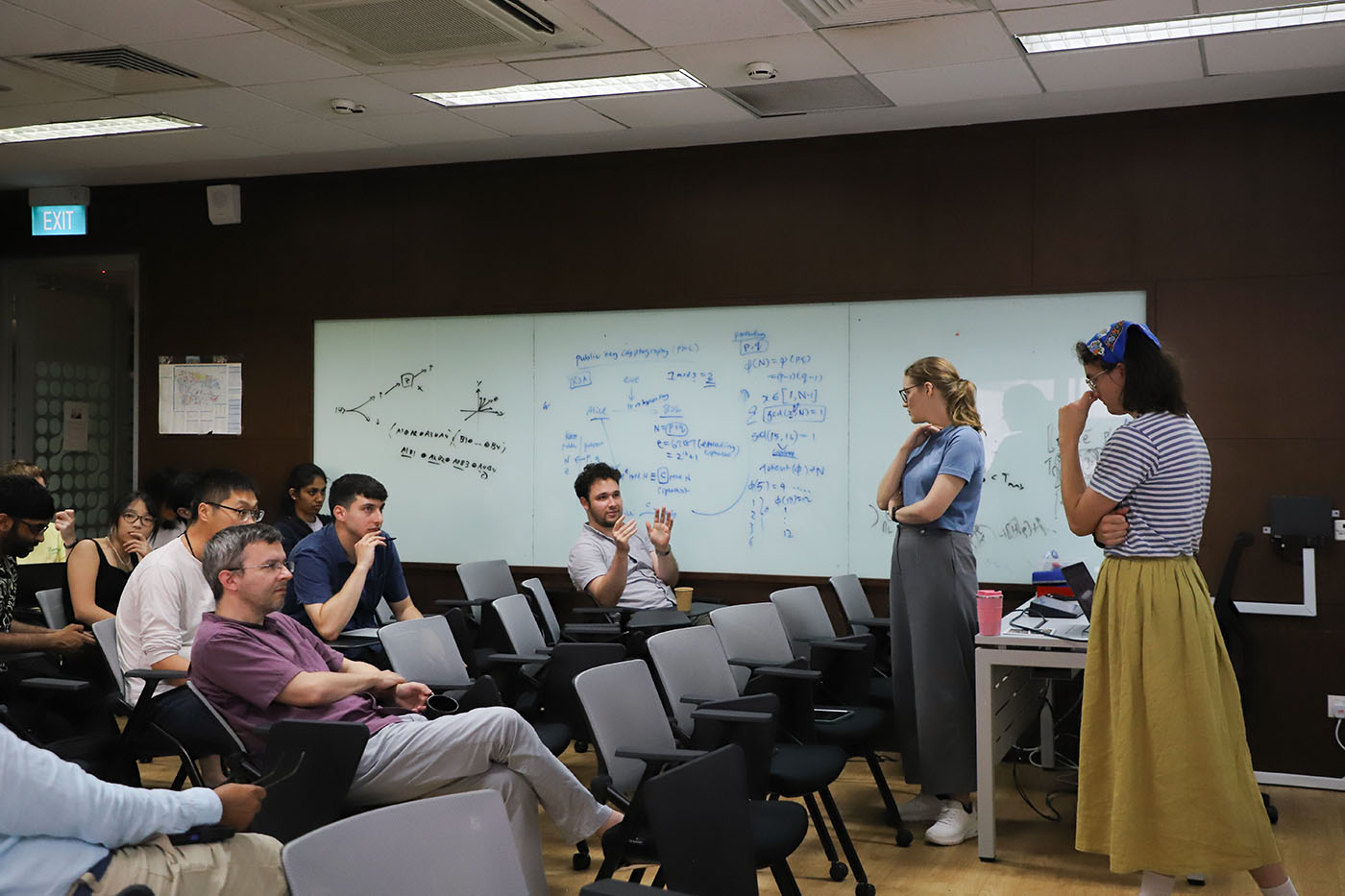
Each session consisted of invited talks followed by a panel discussion for extended question-and-answers. Singapore research was presented in a few speaking slots. CQT Principal Investigator Christian Kurtsiefer spoke about making narrowband photons from single atoms, which can enable atom-photon entanglement. Alexander Dixon from SpeQtral, a CQT spin-off company, spoke about the company’s satellite-to-ground entanglement-based quantum communication satellite, SpeQtre. Launched in 2025, the satellite will communicate with an optical ground station operated by CQT researchers.
Joining as a special guest by video call, Charles H Bennett, a recipient of the 2025 Turing Award for his foundational work in quantum information science, gave a short talk on problematising privacy. This included perspectives on theoretical and practical security from classical networking.
To widen the discussion to broader questions, Paul Kwiat, Professor at the University of Illinois Urbana-Champaign and a member of the international WQRN steering committee, hosted a hybrid panel discussion on quantum ethics.
Attendees could also present posters, with over 50 put on display.
Networking researchers
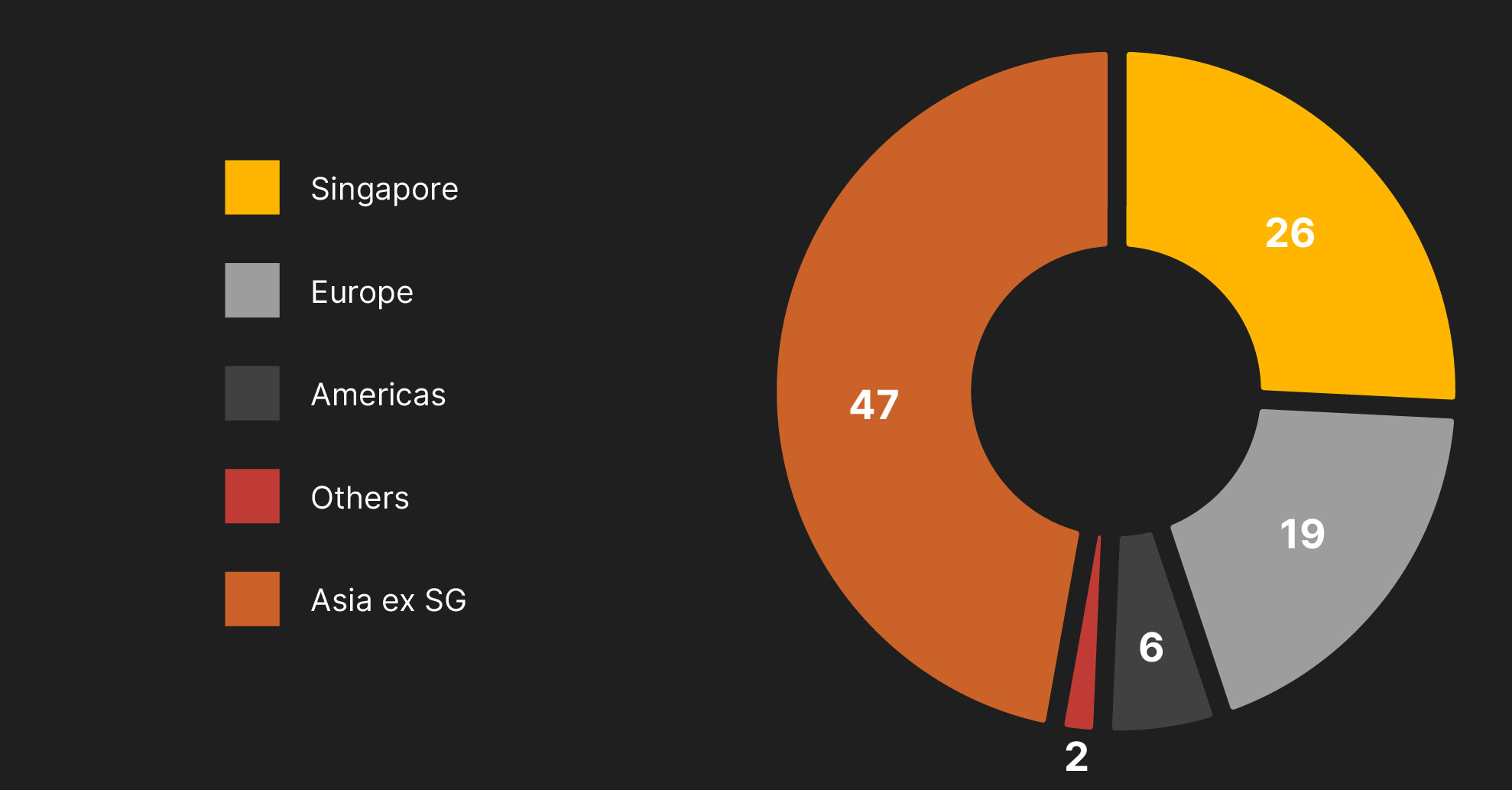
To allow ample opportunity for participants to share ideas, attendance to WQRN is limited by design. This fifth edition had some 100 participants from about 20 countries.
“It is good to keep the conference small and focused, allowing participants to attend all the talks which are carefully curated,” says PhD student Liam Ramsey from the University of Illinois Urbana-Champaign, who presented a poster at WQRN. “It is very nice, especially the continuous flow of coffee.”
Participants of the workshop met some of Singapore’s wider research community through visits to labs at the Agency for Science, Technology and Research (A*STAR) and CQT labs at the National University of Singapore. in a pre- and post-conference programme respectively. CQT Principal Investigator Lam Ping Koy was the overall host at A*STAR. At CQT, they visited the labs of Alexander, Christian, Manas Mukherjee, Steven Touzard and Zhu Di. They also visited the National Quantum-Safe Network, National Quantum Computing Hub and the Singapore Optical Ground Station.
WQRN6 is already being planned with Alexander chairing the steering committee. He says, “As the chair of WQRN6, I am looking forward to gathering the community together again to discuss the latest findings and updates. It will be exciting to see the progress the community has made in two years’ time.”