Meet a CQTian: Kavan Modi
Kavan, whose research is focused on understanding quantum stochastic processes, joins CQT as a Principal Investigator
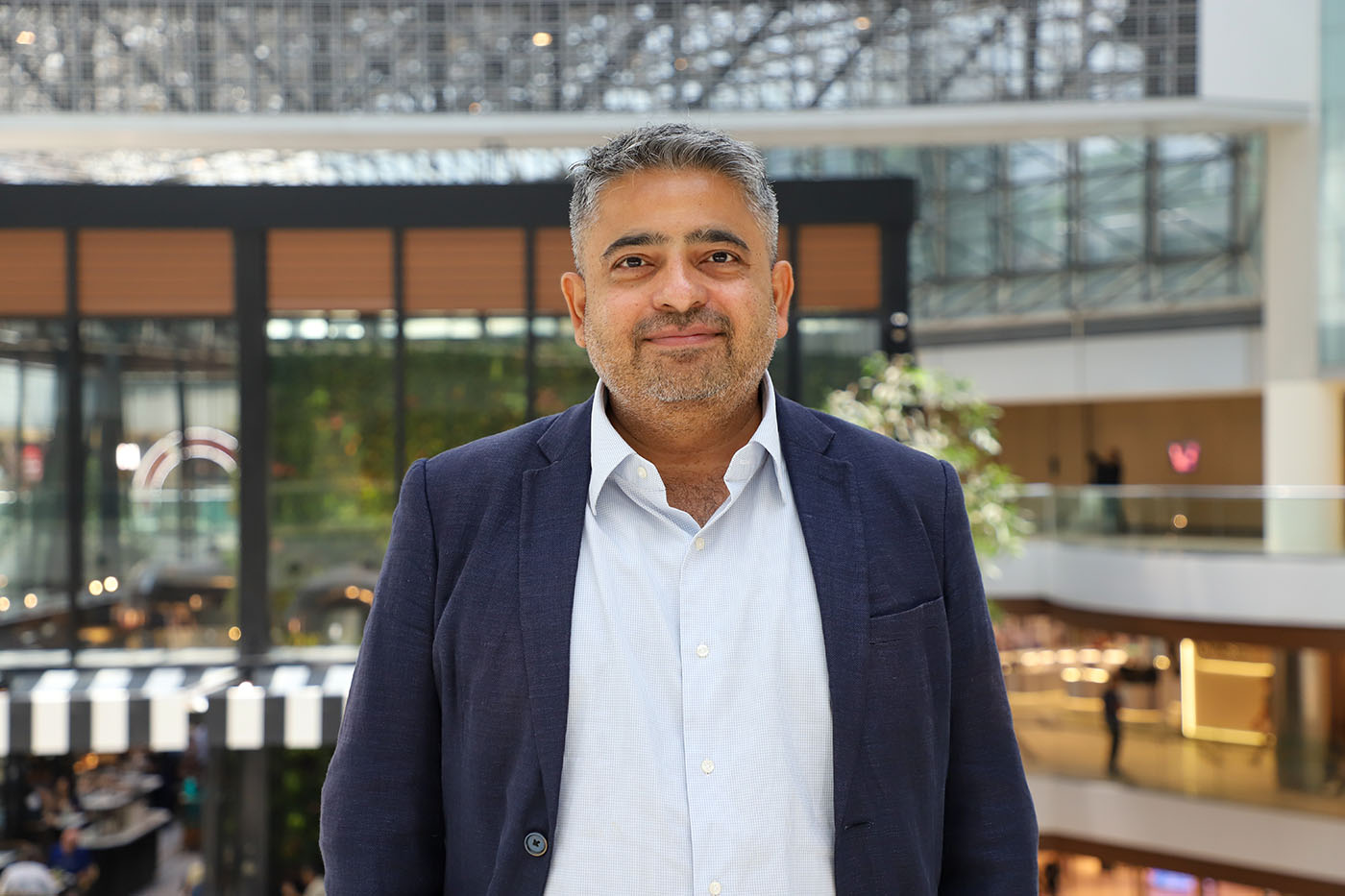
Singapore’s big quantum community and good food have drawn Kavan back.
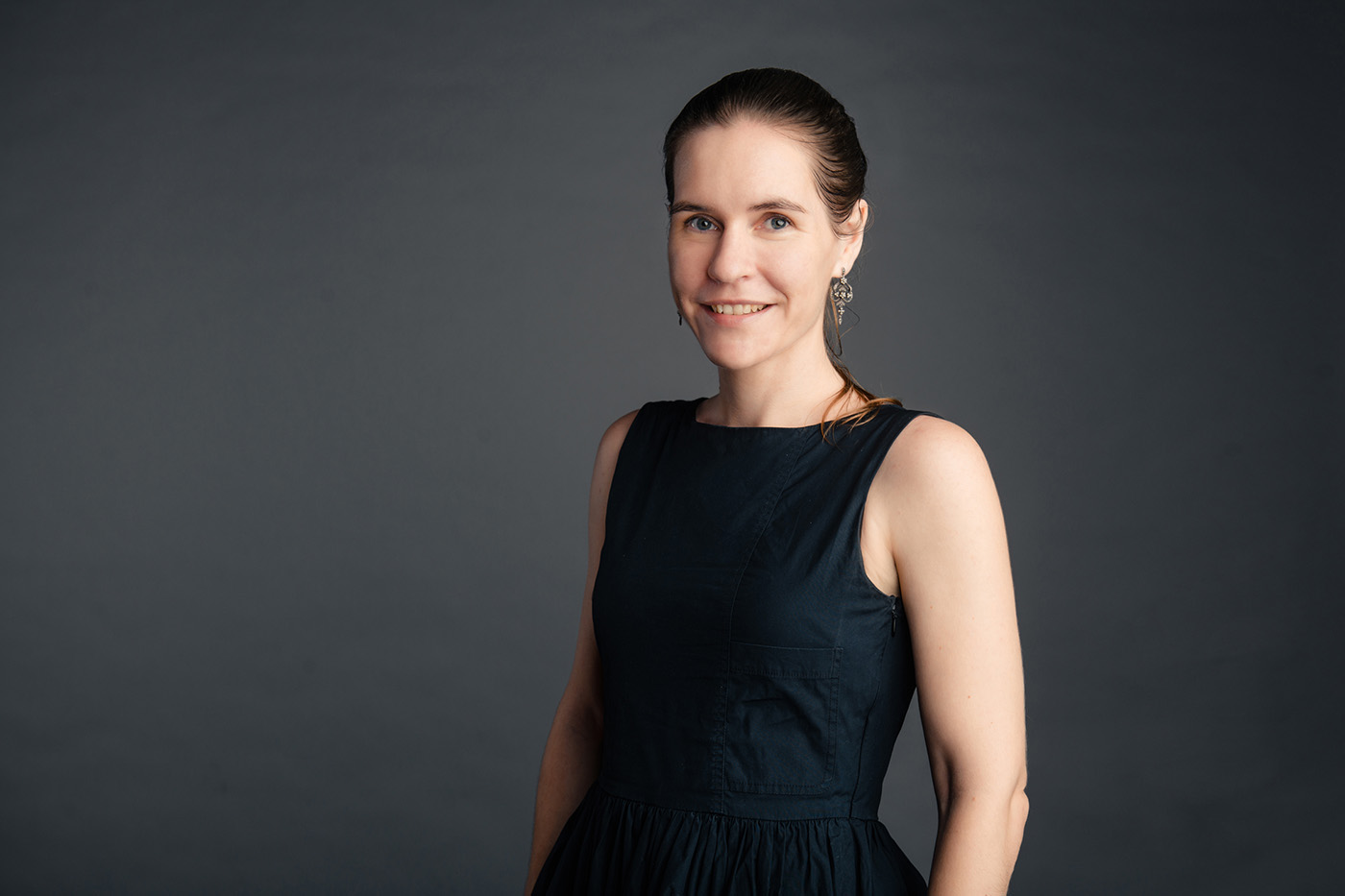
Kavan Modi joined CQT as a Principal Investigator in May. He is also a Professor at the Singapore University of Technology and Design (SUTD). Before joining SUTD, he was a Professor at Monash University in Australia. His research is focused on understanding quantum stochastic processes.
How did you come to be at CQT?
I first started at CQT in 2009 as a postdoc after finishing my PhD at the University of Texas, Austin. This was in CQT’s early days, and I worked in the group of former Principal Investigator Vlatko Vedral. Eventually, I got a job in Australia where I stayed for 11 years. My wife was also a postdoc at CQT, and we always thought we would come back to Singapore at some point. Singapore is exciting and we like the food and weather. When the opportunity arose at SUTD, we both applied and got our jobs independently.
What do you remember from CQT’s early days?
I was actually going to a job interview in Tokyo when I randomly applied for that postdoc role at CQT. They said I could come to Singapore to interview, so I flew from Tokyo to Singapore. I remember that the people were excellent. When I got here, I talked to everybody and worked with a lot of people. I thought it was great to have a big community and I’m looking forward to interacting with everyone again.
What is your research about?
My research programme is focused on understanding quantum stochastic processes, or quantum dynamics as it is referred to. We can use this to understand noise in quantum systems and error correction, as well as the dynamics of natural systems or condensed matter systems. I also want to apply the same ideas to chaotic systems and, at the next level, understand different phases of dynamical processes.
What are you currently working on?
It is in the early stage, but I’ve been thinking about how to use noisy quantum devices to simulate open quantum systems. These systems are noisy dynamical processes, and solving them is interesting to chemists and material scientists. We don’t quite know how to develop an algorithm for that – how to write a prescription that would simulate a specific model you want to solve. If successful, it could be very powerful because we can use cheaper, noisier devices to do something useful.
What first got you interested in quantum?
When I started my PhD, I didn’t know what my topic would be. You had to do classes and along the way, pick your supervisor and topic. Back then, the hottest field was string theory. I knew that I wasn’t smart enough to be a string theorist. I had spent some time doing particle physics and I didn’t like that. So it was between statistical physics, condensed matter physics and quantum information.
I thought that there was something neat about information and quantum. What was also nice was that some of the earlier works in quantum information came from people who were at Texas – William Wootters and Wojciech H Zurek who derived the no-cloning theorem, and Ben Schumacher who coined the word ‘qubit’. The residual effect and impact that Texas had on quantum information was still there.
What do you enjoy most about what you do?
In the early days, some problems were kind of simple and you could solve them with relative ease. I think it is still true to an extent, at least conceptually. I like the simplicity, even when it does get more and more mathematically technical.
What is your favourite wrong idea?
I’ve done some work on quantum chaos, extreme sensitivity to small perturbations, and it has taken years to make some progress. What we showed was that quantum chaos requires a lot of entanglement in a specific way. That idea is probably not completely right; we’re not 100% there. We don’t know how to fix it, but we keep trying.
Another is the idea of using noisy quantum devices for something useful. A lot of people can say something about that, but I want to take a very different approach. If the device is noisy and quantum, then maybe it is good at doing something that is noisy and quantum. We’ve tried building architectures for this and it goes wrong all the time.
What do you do outside of work?
My wife and I go exploring to find places with good food. Food was one of the main reasons to come back to Singapore. I think the first time I ever tried cereal prawn was when I was here. It was probably when I went out to dinner with Principal Investigator Kwek Leong Chuan when I first joined CQT. I had it recently again and it’s still good.