Meet a CQTian: Jayne Thompson
Jayne’s work operates at the intersection of agentic quantum computing, quantum algorithms, and quantum information theory
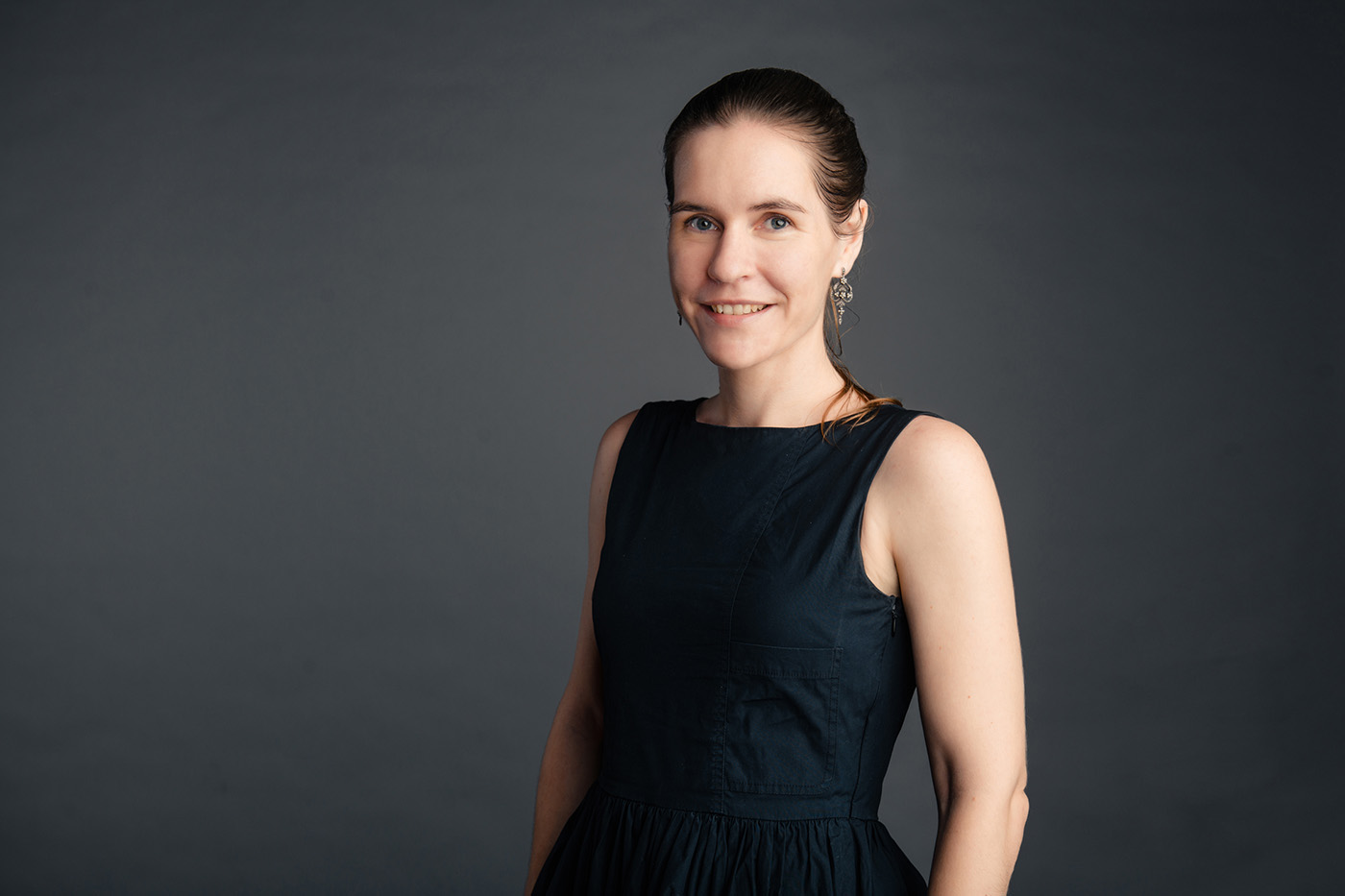
Once a Research Fellow at CQT, Jayne returns as a CQT Fellow with a sharpened focus on bridging theoretical research with practical algorithmic design.
After a stint in industry, Jayne Thompson returns as a CQT Fellow working on theoretical quantum computing. She specialises in agentic quantum computing, quantum algorithms, and quantum information theory.
You recently rejoined CQT as a Fellow, but your story here started years ago. What brought you back?
It feels good to be back where my career started. I spent eight years as a Research Fellow here mostly in former Principal Investigator Vlatko Vedral’s group. I absolutely loved being a part of CQT!
Ultimately, however, I wanted to solve the problem of what people were going to use quantum computers for, and I really wanted to make that transition from concept to reality happen. That drive to make quantum computing a practical reality pushed me into industry, working with Horizon Quantum and then at A*STAR’s Institute of High Performance Computing.
Now, I’ve returned to CQT with a sharpened focus on bridging theoretical research with practical algorithmic design. I have a joint position at the Nanyang Technological University’s computer science and maths departments.
How would you define your core research mission?
My work operates at the intersection of agentic quantum computing, quantum algorithms, and quantum information theory. I’ve been building quantum agents and quantum sequence models for over a decade – designing quantum systems to dynamically take in information from their environment, process it, and decide how to act.
Looking at the bigger picture, my drive is a bit more general. I like to design foundational protocols that will unlock true quantum advantage. Whether we are building adaptive agent models or developing entirely new quantum information processing algorithms, the goal is to architect theoretical solutions that scale. I want to establish the rigorous mathematical guarantees and frameworks that will allow quantum computers to efficiently process information in ways classical systems simply cannot.
What are the most critical roadblocks you are trying to overcome?
First, classical AI is facing an exponential resource crisis. One of the most important open problems is proving how we can execute these complex behaviours far more efficiently inside quantum systems, an issue we tackled in a recent paper.
The second major roadblock, more broadly in quantum computing, is the data loading bottleneck. We must figure out how to efficiently represent classical data within quantum states so that we can run algorithms and analysis on them. If the data load takes too long, it completely eats up the quantum advantage we expect to get out of the computation. Overcoming this is essential for moving quantum applications from theory into reality.
What are you looking forward to in your role?
Solving problems that have not been solved before. Research gives me the opportunity to chase the frontier and the freedom to pick problems that interest me. Beyond the algorithms themselves, I am looking forward to collaborating and sharing ideas to come to a better understanding of these complex systems. I am also really excited to start working with students, mentoring the next generation and helping them formalise their empirical intuition into rigorous proofs and new protocols.
What do you do outside of work?
I have an eight-year-old and a four-year-old, so raising them consumes quite a lot of my free time. I like to run as well, although these days I’m mostly running after my kids.