CQTians win awards from the Institute of Physics Singapore
Congratulations to Murray Barrett, Tan Peng Kian and Alexander Hue on recognition for their contributions in research and outreach!
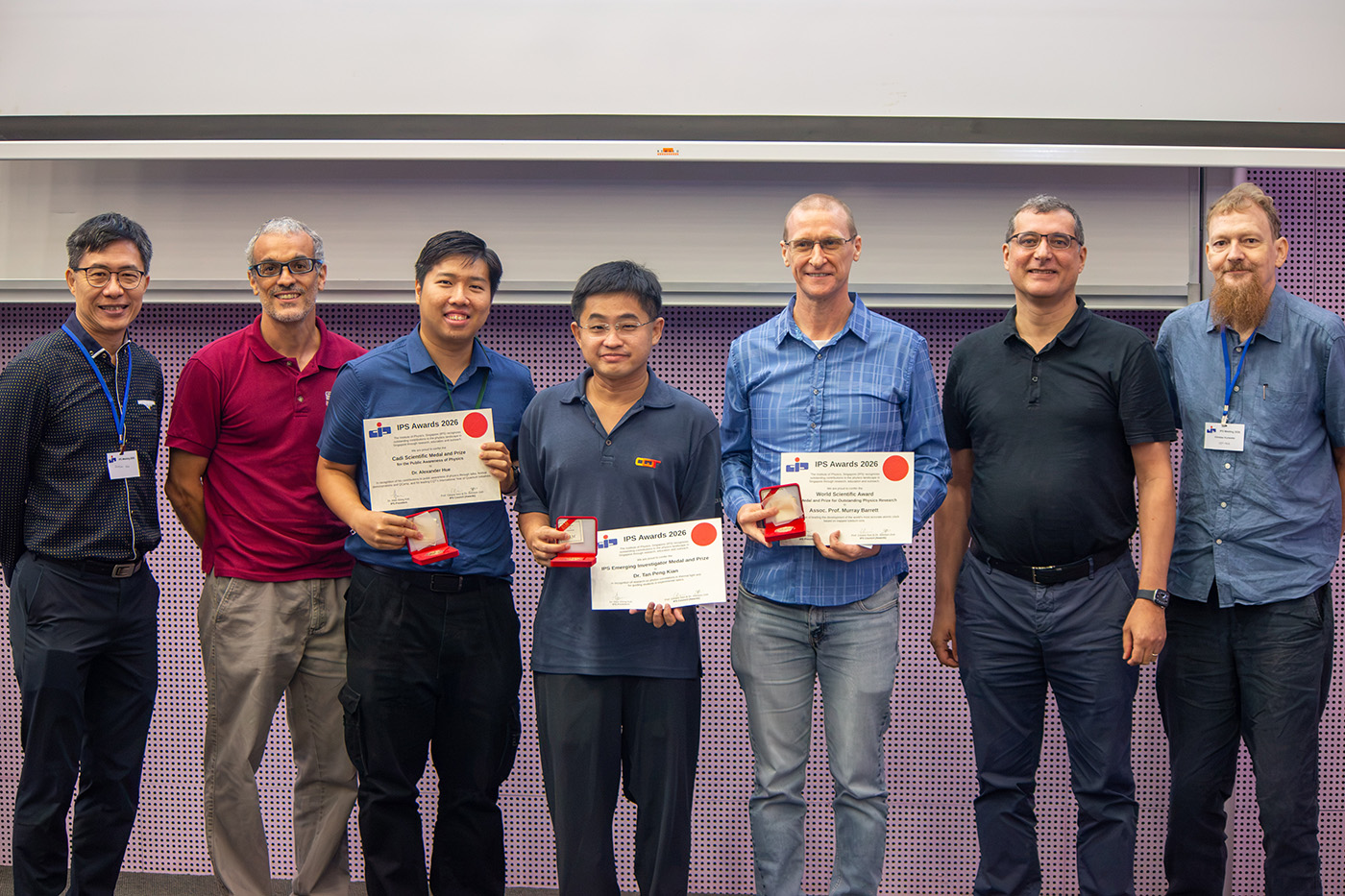
The IPS Awards Committee with the CQT awardees. Pictured (from left) are physicists and prize winners Johnson Goh, Dario Poletti, Alexander Hue, Tan Peng Kian, Murray Barrett, Cesare Soci and Christian Kurtsiefer.
Congratulations to three CQTians selected for the 2026 Institute of Physics Singapore (IPS) Awards! At a presentation on 28 October, Murray Barrett and Tan Peng Kian were recognised for their research and Alexander Hue for his role in public outreach.
They were among ten award recipients celebrated. Given annually, the IPS Awards recognise outstanding contributions to the physics landscape in Singapore through research, education and outreach at all levels.
The awards were presented at the 2026 IPS Meeting, held 28 to 30 October at the Singapore University of Technology and Design (SUTD).
Outstanding research and outreach
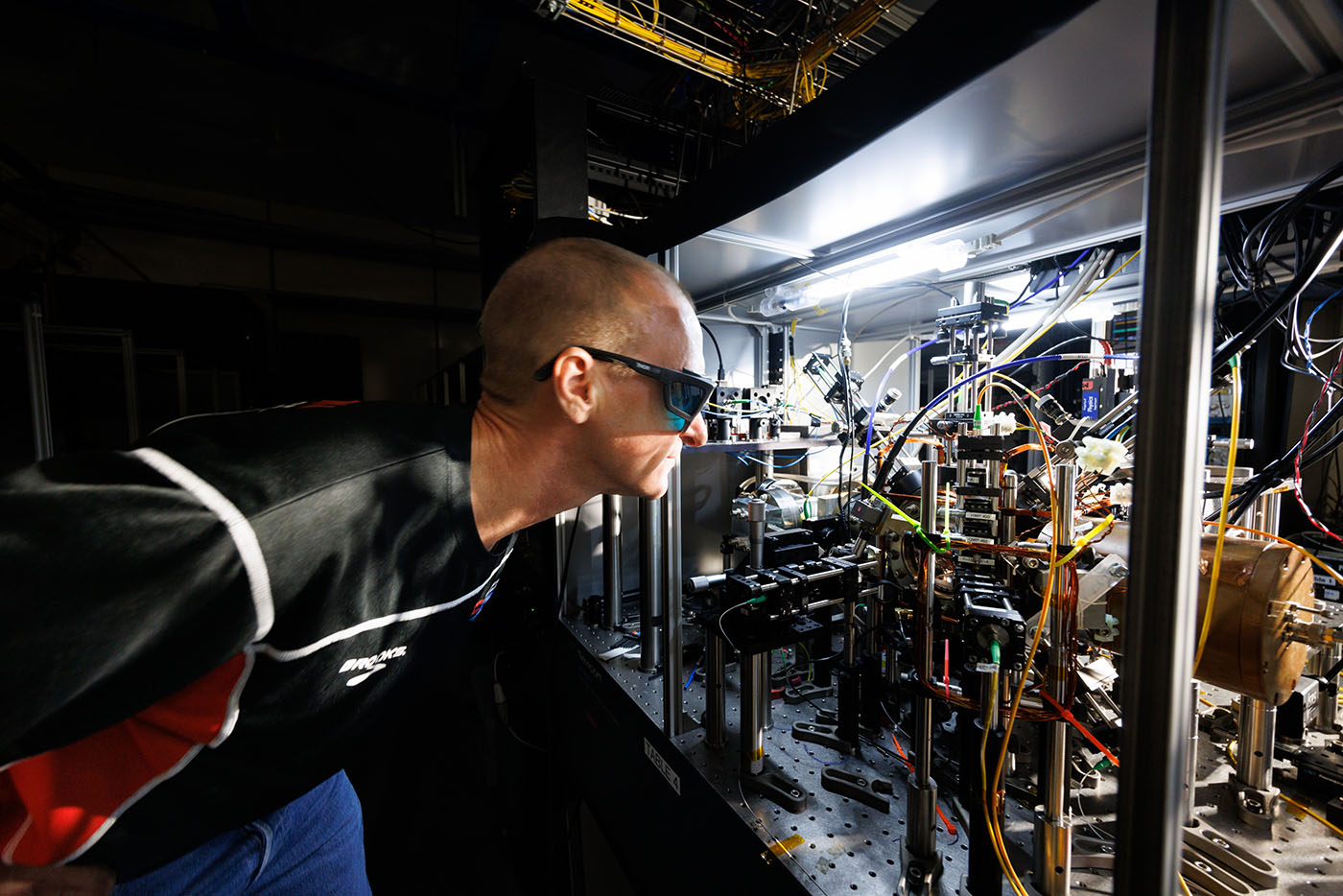
Murray, who is a CQT Principal Investigator and Associate Professor in the Department of Physics at the National University of Singapore, won the IPS Outstanding Physics Research Award for “outstanding achievement in precision quantum metrology, leading development of the world’s most accurate atomic clock based on trapped lutetium ions, setting a new benchmark in timekeeping and advancing tests of fundamental physics”.
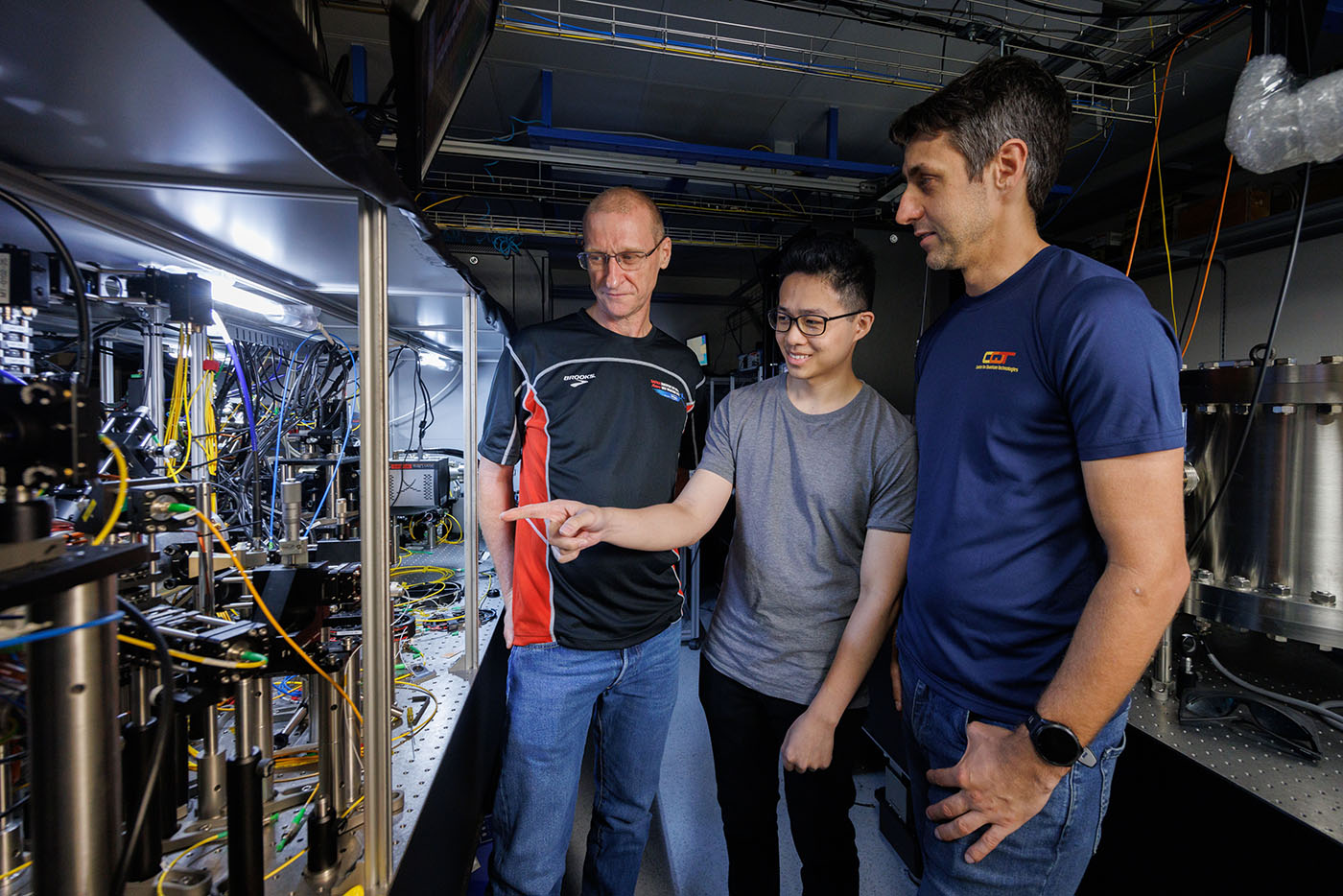
The award is another feather in Murray’s cap. In September, his group reported in Nature that their lutetium atomic clock measures time with record-breaking accuracy, outperforming other clocks built from different elements. They measured the frequency of their clock to the lowest reported uncertainty to date, and they made the most precise clock comparison ever by comparing the ticking of two lutetium clocks. The publication is the culmination of more than a decade’s work.
The work received international attention, reported in The Economist, South China Morning Post, Nature News, and the Otago Daily Times amongst others.
The group is now working on miniaturising the clock.
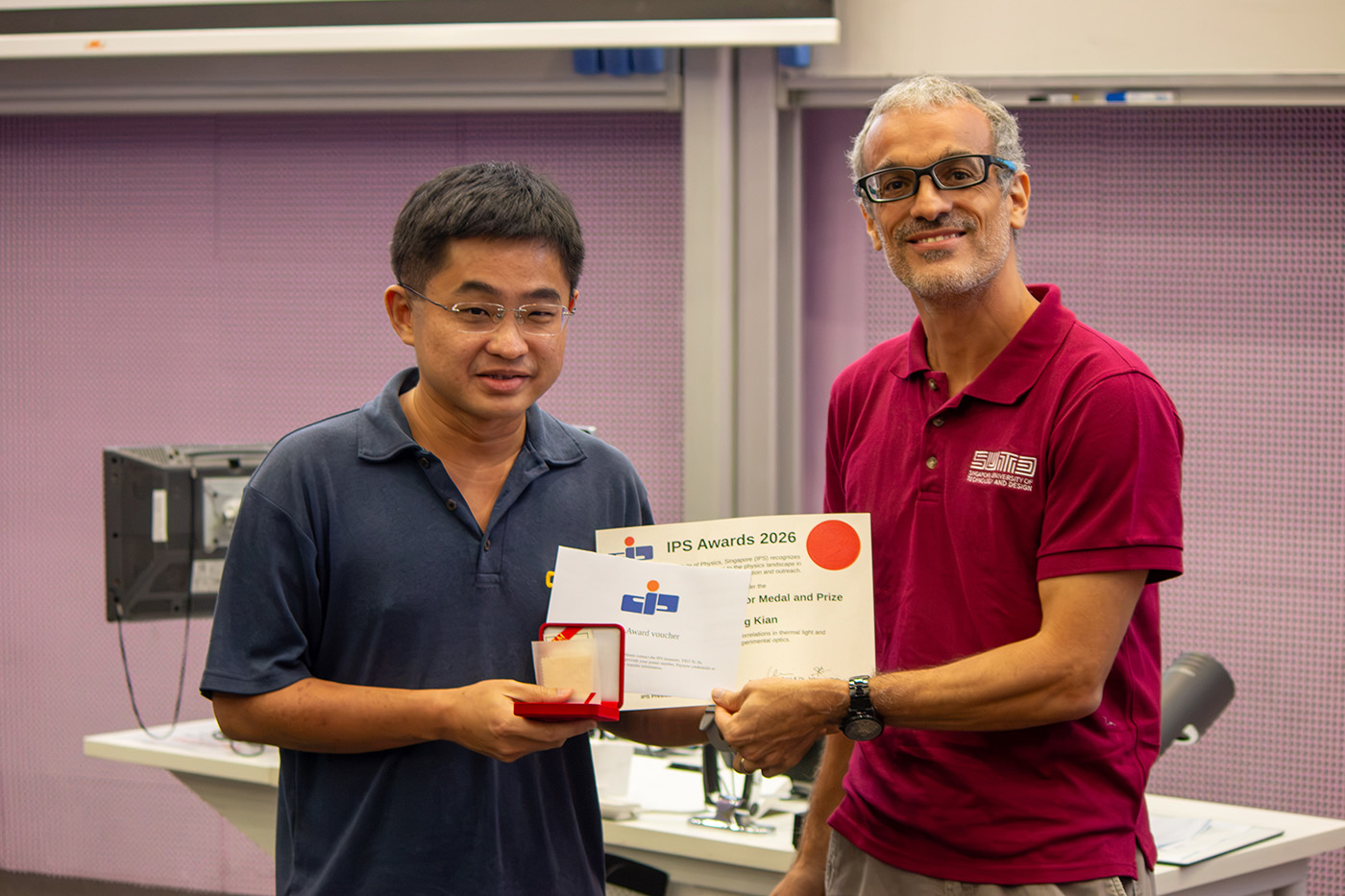
Peng Kian, who recently became an alumnus, was awarded the IPS Emerging Investigator Prize “in recognition of pioneering research on photon correlations in thermal light, including a record observation of photon bunching in sunlight, with applications to LIDAR and starlight astronomy, and for guiding students in experimental optics”.
Peng Kian’s research on thermal light started when he worked with Principal Investigator Christian Kurtsiefer as an undergraduate with an idea to use quantum techniques to observe the stars. By the time he became a CQT Senior Research Fellow, he was leading efforts to use thermal light to develop a new kind of ranging technology by detecting how the photons bunch together as they reflect off a distant object.
Earlier this year, Peng Kian also received a Singapore National Day Award, a Commendation Medal bestowed for “commendable performance and conduct, or significant efficiency, competence and devotion to duty”.
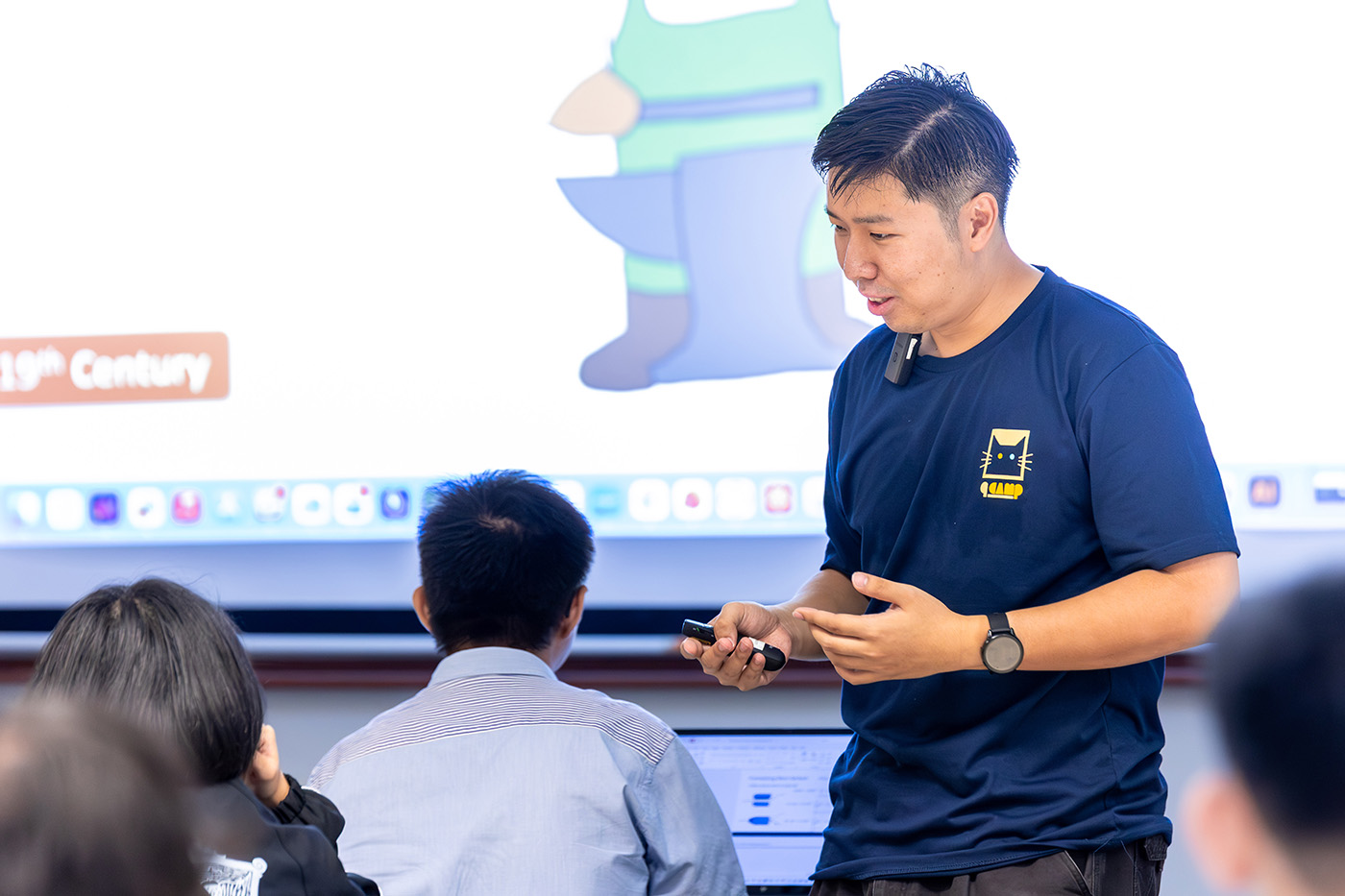
Last but not least, Alexander Hue from the CQT admin team was awarded the Cadi Scientific Medal for “dedicated and creative contributions to the awareness of physics, inspiring large audiences through cartoon-enlivened talks, festival demonstrations and QCamp, and leading CQT’s International Year of Quantum Science and Technology initiatives”.
“I was shocked, amazed, surprised, and grateful,” Alex says of his reaction when he first heard the news of his award. “I love physics, and I love education, and to receive a reward for doing what I love feels like cheating, but I am happy.”
Alex became Education Manager in January 2025. His responsibilities include leading the organisation of QCamp, CQT’s annual outreach camp for pre-university students which Alex has been volunteering at since 2017, and hosting educational visits for schools and industry. During the International Year of Quantum Science and Technology in 2025, he led monthly “Show Us Your Science” sessions at Singapore Science Centre, gave talks at the ArtScience Museum and public libraries in Singapore, and participated in science festivals.
Past winners of the IPS Awards include CQT Principal Investigator Christian Kurtsiefer and CQT Fellow Zhu Di, who won the President’s Award and Nanotechnology Physics Award respectively in 2025. In 2023, Laboratory Technologist Mohammad Imran won the Physics Tech Prize and Principal Investigator Gao Weibo won the World Scientific Award.
Related Stories
24 September 2026
Singapore scientists build world’s most accurate atomic clock
Results from the lutetium clock at the Centre for Quantum Technologies and National University of Singapore are presented in Nature