Feng Pan Group
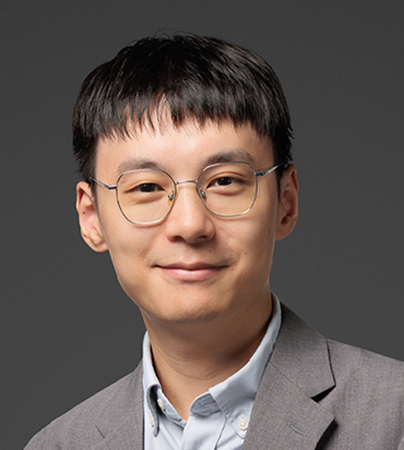
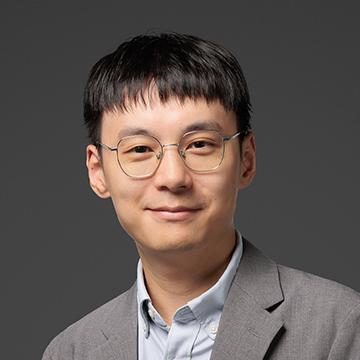
Feng Pan received his PhD at the Institute of Theoretical Physics, Chinese Academy of Sciences. After postdoctoral research in Patrick Rebentrost’s group at CQT, he joined SUTD’s Science, Mathematics and Technology Cluster as Assistant Professor in 2025, and is now also a CQT Fellow. He combines tensor networks, statistical physics and machine learning to tackle problems in quantum computing. His work on classically simulating Google’s Sycamore circuits was covered by Science and New Scientist. He also collaborates closely with leading technology companies, including Google Quantum AI, IBM and NVIDIA.

CQT Fellow
Centre for Quantum Technologies
Assistant Professor
Science, Mathematics, and Technology Cluster, Singapore University of Technology and Design


Feng Pan Group
Building useful quantum computers raises hard computational questions of its own. How far can classical computers go in simulating quantum processors, and where does genuine quantum advantage begin? How can we infer which errors have struck a noisy device, and characterize the noise itself? Many such questions, along with long-standing problems in statistical physics and combinatorial optimization, share a common mathematical core: a large network of interacting variables with exponentially many configurations. Tensor networks provide a natural language for this structure, and the right algorithms can make seemingly intractable calculations practical.
Our group develops such algorithms at the interface of tensor networks, statistical physics, machine learning and high-performance computing. We design methods for contracting large, irregular tensor networks on GPUs and supercomputers, and use them to simulate quantum circuits and chart the classical frontier of quantum advantage, from Google’s Sycamore to IBM’s recent circuit-sampling experiments. For quantum error correction, we develop decoders ranging from exact maximum-likelihood methods to generative and foundation models, together with tools for estimating device noise. We also apply these ideas to spin glasses and large-scale combinatorial optimization. Throughout, we care about the full path from mathematical insight to efficient, scalable code, and work closely with experimental and industry partners to bring our methods to real quantum hardware.