Tan Ying Zhe Ernest Group
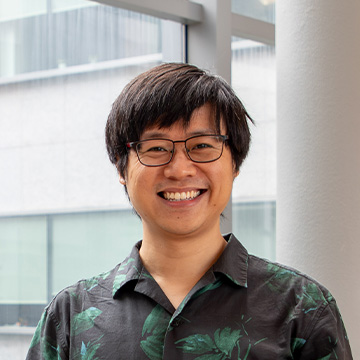
Ernest Ying Zhe Tan obtained his undergraduate degree in physics at NUS with a final-year project under Kwek Leong Chuan, followed by a Master’s degree on quantum nonlocality supervised by Valerio Scarani. He obtained his PhD at ETH Zürich in Renato Renner’s group, working on device-independent cryptography. He subsequently conducted postdoctoral research on quantum key distribution with Norbert Lütkenhaus at the Institute for Quantum Computing, University of Waterloo, before returning to NUS in September 2025. His research interests include quantum cryptography, quantum nonlocality and quantum information theory, as well as the applications of numerical algorithms in these areas.

CQT Fellow
Centre for Quantum Technologies
Assistant Professor
Department of Physics, National University of Singapore


Tan Ying Zhe Ernest Group
Our research work lies at the intersection of foundational concepts in quantum theory and applications in cryptography. For instance, we study how fundamental quantum principles such as entanglement, nonlocality and no-cloning can be translated into protocols for a variety of cryptographic tasks, such as key distribution, randomness generation, or intrinsically quantum functionalities with no classical counterpart, such as certified deletion. We aim to develop these connections from both perspectives: deepening our understanding of foundational principles, while also exploring the prospects of inventing novel and interesting cryptographic protocols. To support this goal, we also aim to further develop rigorous mathematical results in the field of quantum information theory: for instance, characterising the properties of the many different forms of quantum entropy, which have proven greatly useful in providing rigorous security proofs with strong quantitative performance. Another significant aspect of our research is the use of convex optimisation in security proofs, ranging from the underlying convex analysis to the numerical software implementation. We welcome students from backgrounds in mathematics and physics, as well as students with experience in optimisation theory or implementation.

Recent papers
Flexible rigidity: Compiling generic trusted-preparation protocols into sequential device-independent protocols
Security proofs for practical QKD: variations, techniques, gaps, and limitations
Marginal-constrained entropy accumulation theorem
Generalized Rényi entropy accumulation theorem and generalized quantum probability estimation
Experimental quantum key distribution certified by Bell’s theorem