Singapore’s quantum-safe network testbed shortlisted for global award
Winners of the Digital@UNGA awards will be announced at the United Nations headquarters in September
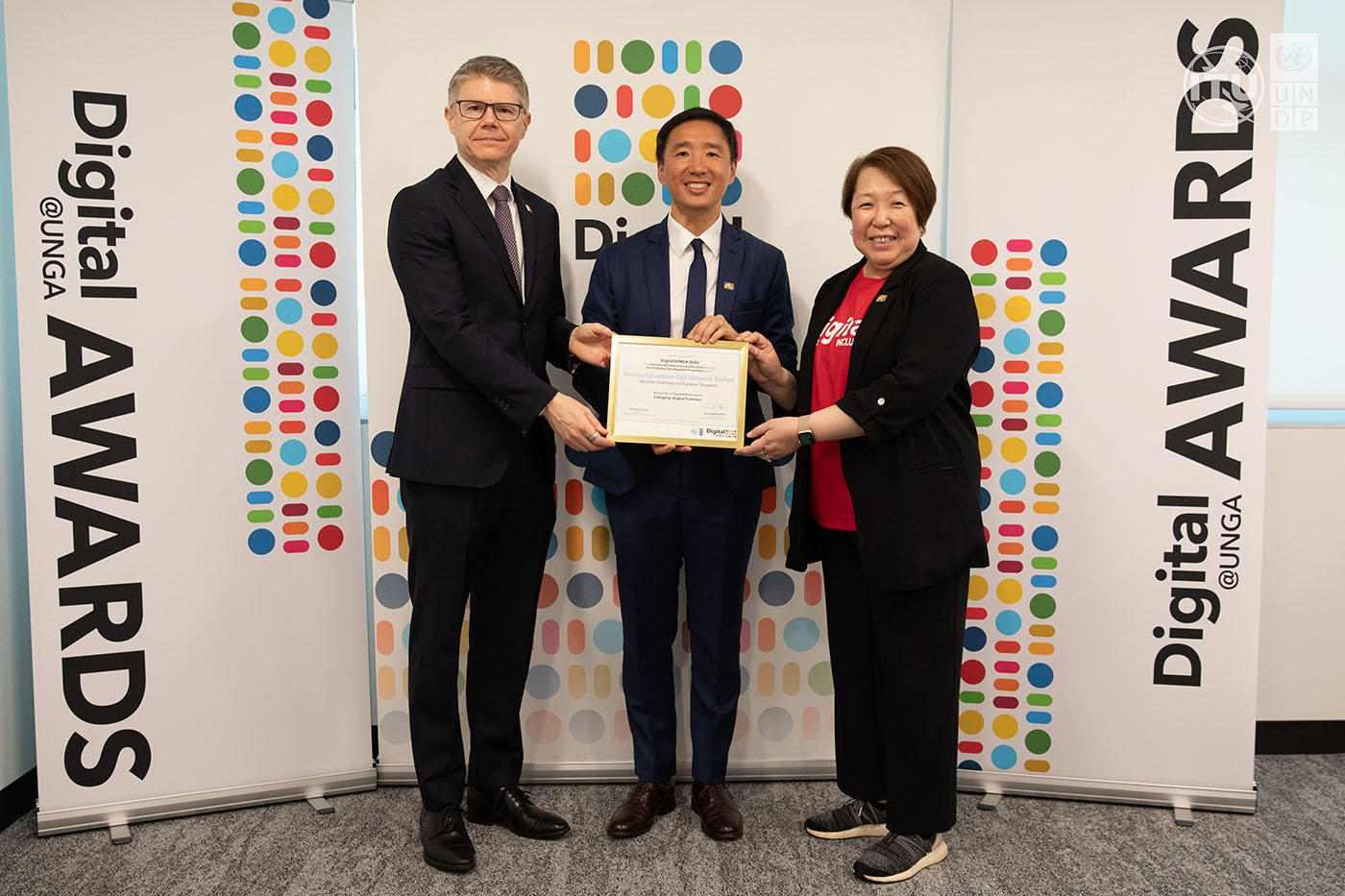
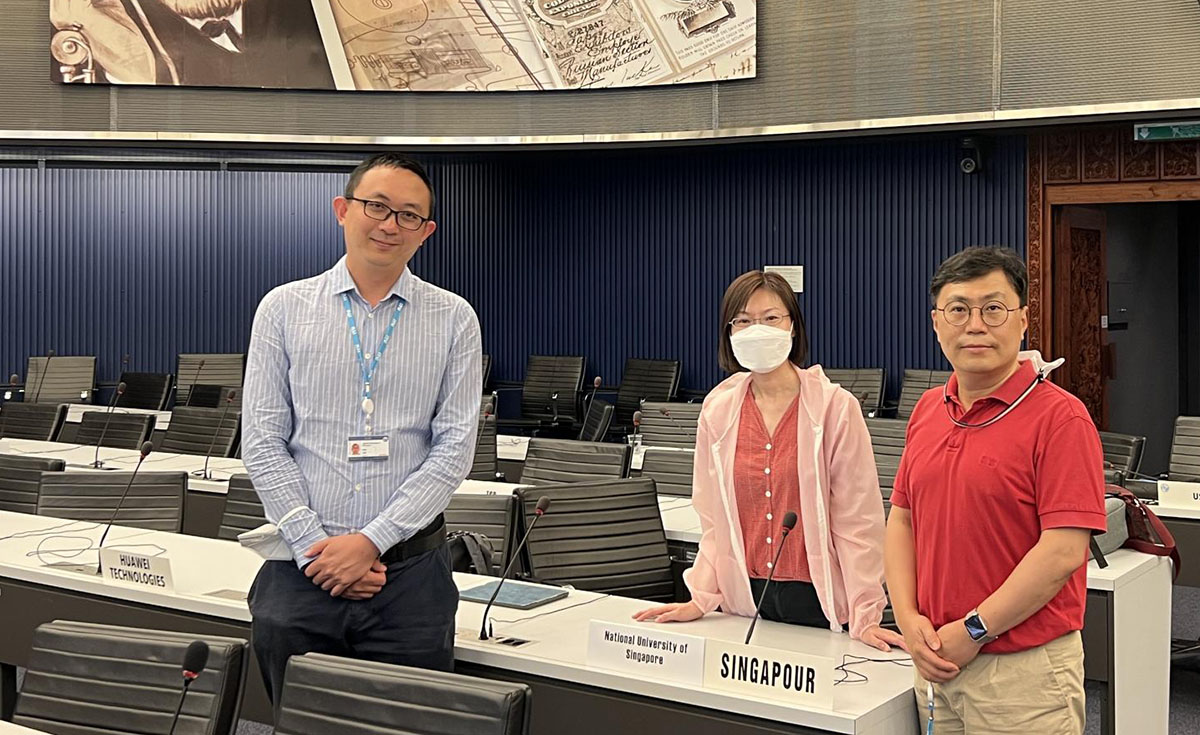
Update: On 21 September 2026, NQSN was announced as one of four runners-up for the Digital@UNGA award. Alexander Ling (centre) received the award on behalf of the NQSN testbed at the Digital@UNGA event in New York.
Singapore’s National Quantum-Safe Network (NQSN) testbed has been named one of 15 finalists for a global Digital Frontiers award. The award is run by Digital@UNGA, a platform at the United Nations General Assembly that spotlights how digital technologies can be a force for good.
NQSN was shortlisted from 1500 submissions from 146 countries across four award categories. The shortlists were announced on 24 August.
“International recognition for Singapore’s work on building a quantum-safe network, and for sharing the lessons openly, is a huge validation on the effort that our team and partners have put into our testbed over the past few years. Our goal is to show what the infrastructure of the future might look like,” says Alexander Ling, who leads the NQSN team. He is a Principal Investigator at Singapore’s Centre for Quantum Technologies and Professor in the National University of Singapore’s Department of Physics.
The Digital@UNGA platform is convened by the International Telecommunication Union (ITU) and United Nations Development Programme.
Future security
Advances in quantum computing threaten some of today’s encryption systems, making it urgent for organisations to migrate to ‘quantum-safe’ alternatives to protect cybersecurity.
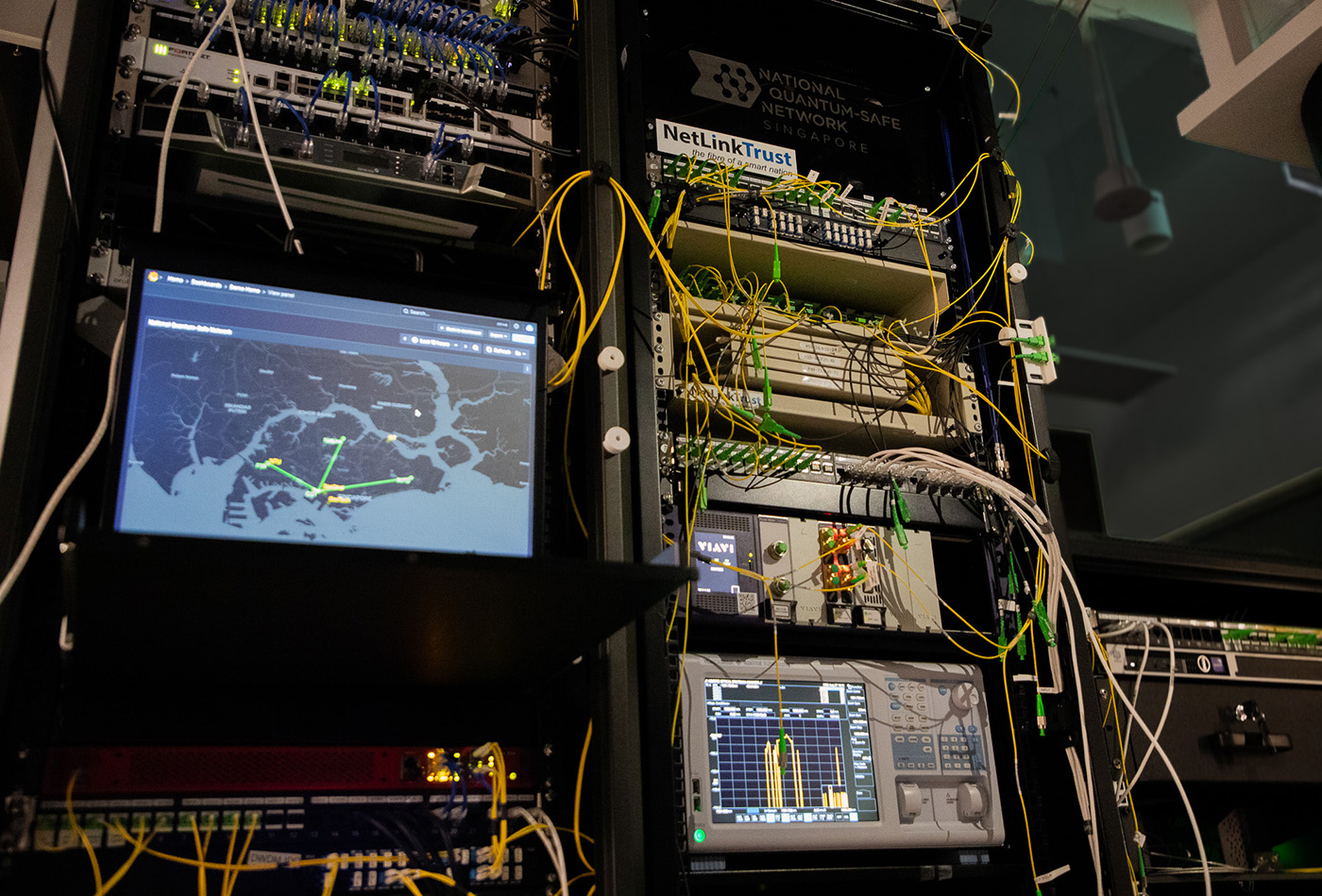
The NQSN testbed, first established in 2022, forms part of Singapore’s National Quantum Strategy to enable collaboration between industry, academia and government agencies. The team is now working with more than 30 organisations and has access to over 1,500 km of deployed telecom fibre spanning the city.
That fibre is being used for trials of quantum key distribution (QKD), which builds security from the quantum properties of light, and post-quantum cryptography, which integrates new cryptographic algorithms designed to resist attacks by both conventional and quantum computers.
The network has already demonstrated applications such as data transfer between data centres and cloud computing secured by QKD. The team has also been contributing to the development of local and international standards.
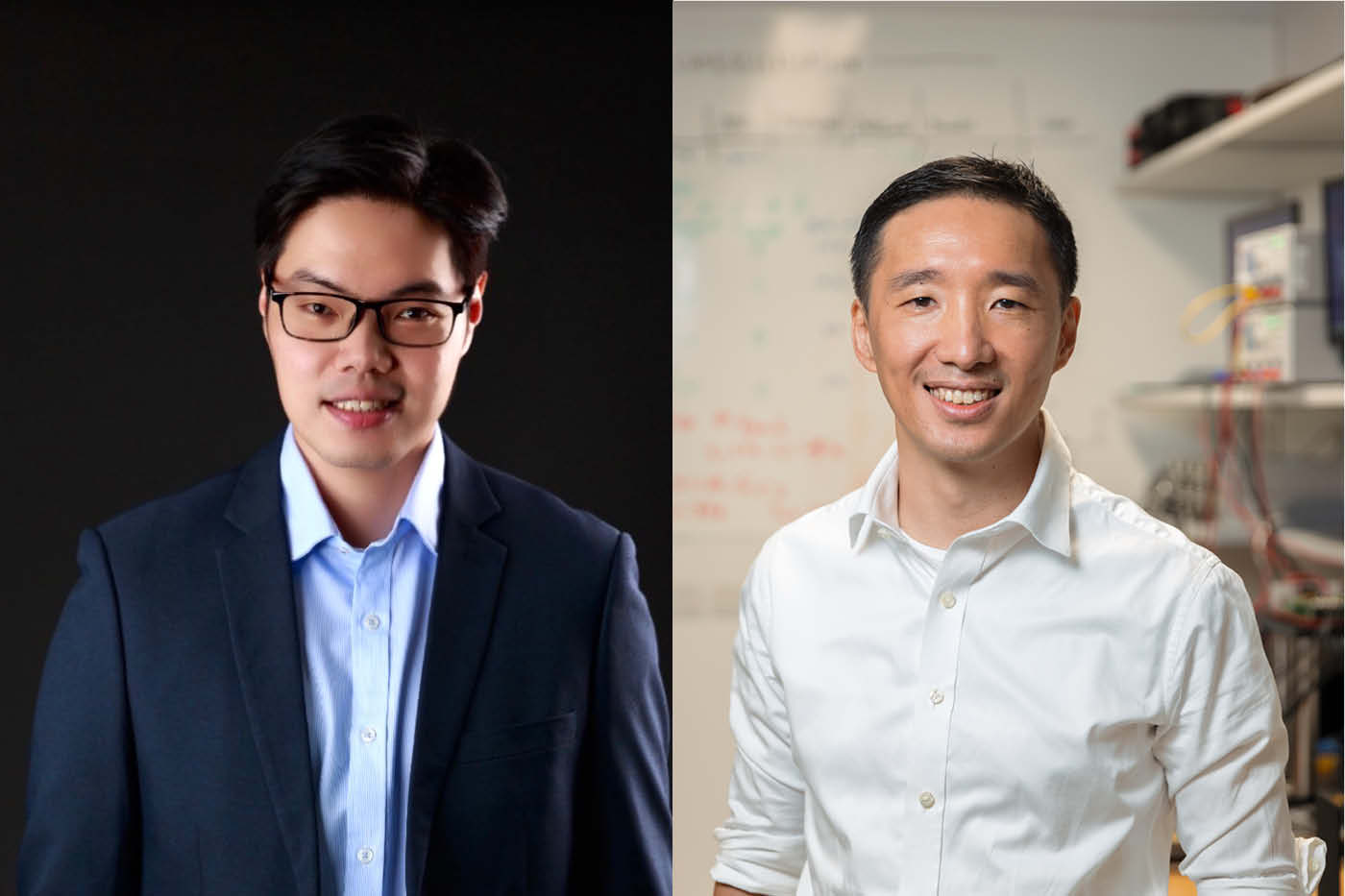
“Through our standardisation work on QKD, we have a long partnership with ITU, one of the organisers of this award,” explains Hao Qin, a CQT Senior Research Fellow who leads standardisation and certification work for NQSN. He helped to organise previous ITU workshops in Singapore and serves as the contact person for the team’s prize submission.
Currently, NQSN is run by some ten academic staff and students, with Hao Qin and CQT Senior Research Fellow Haw Jing Yan working on the network full time.
“Quantum-safe migration is not a trivial journey. The testbed gives solution providers and end users a place to work through the practical gaps together with us,” says Jing Yan, who works on the testbed trials.
Responsible innovation
Among the Digital@UNGA categories, the Digital Frontiers award recognises emerging technologies. The organisers take into consideration “both the development of cutting-edge technologies and leadership in advancing their ethical, safe, and responsible development and use — demonstrating strong governance, future readiness, measurable impact, and potential to scale.”
Shortlisted alongside NQSN are projects including a federated AI platform from CERN, the European Organisation for Nuclear Research, an open data platform for maternal and child health from Brazil and a digital identity system from Sudan. The NQSN is the only project in quantum technologies on the 15-strong shortlist.
The winners and runners-up will be announced at the United Nations headquarters in New York on 21 September during a Digital@UNGA event.
Related Stories

2 December 2025
Bright photonic chip could power quantum networks
Singapore researchers demonstrate entanglement distribution from the chip over 155km
3 March 2023
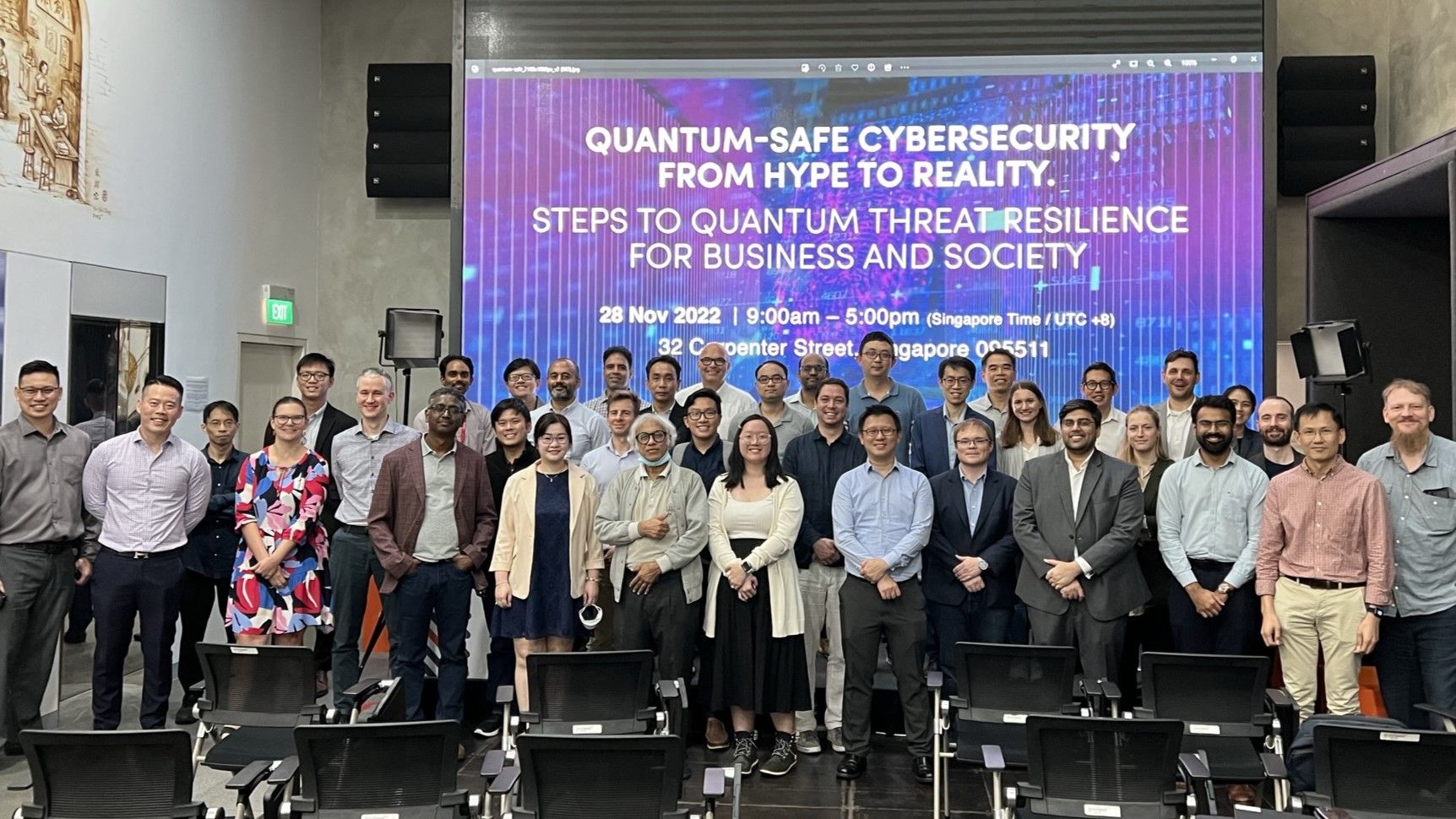
Events build awareness for National Quantum-Safe Network
The NQSN team organised separate workshops with the International Telcommunication Union and SGInnovate with partners
20 October 2023
Driving towards standards for quantum key distribution
National Quantum-Safe Network staff at CQT are contributing to the development of international QKD standards