Congratulations to CQT’s 26 graduates in 2026
We celebrate the largest cohort of CQT PhD graduates in the Centre’s history
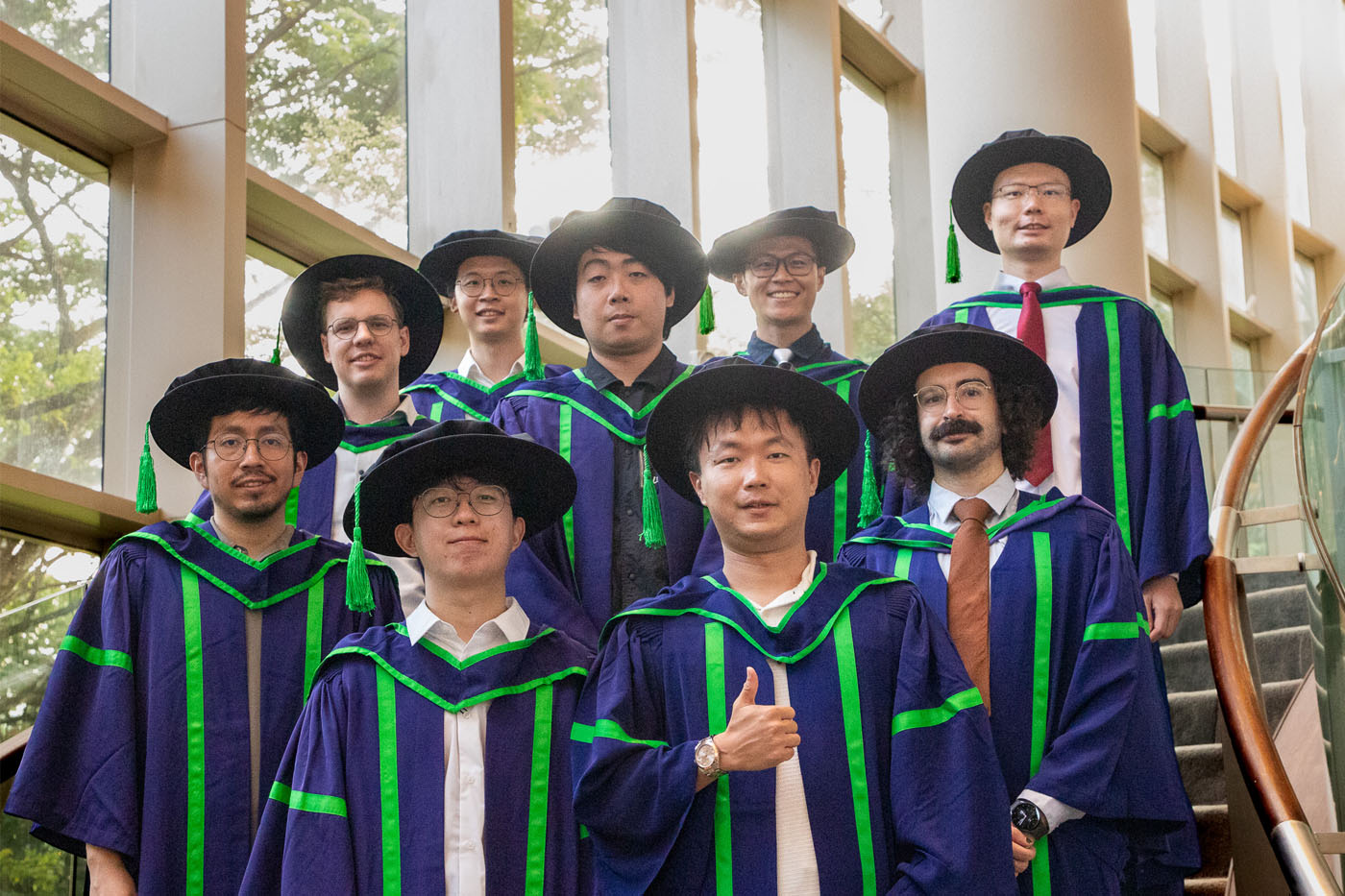
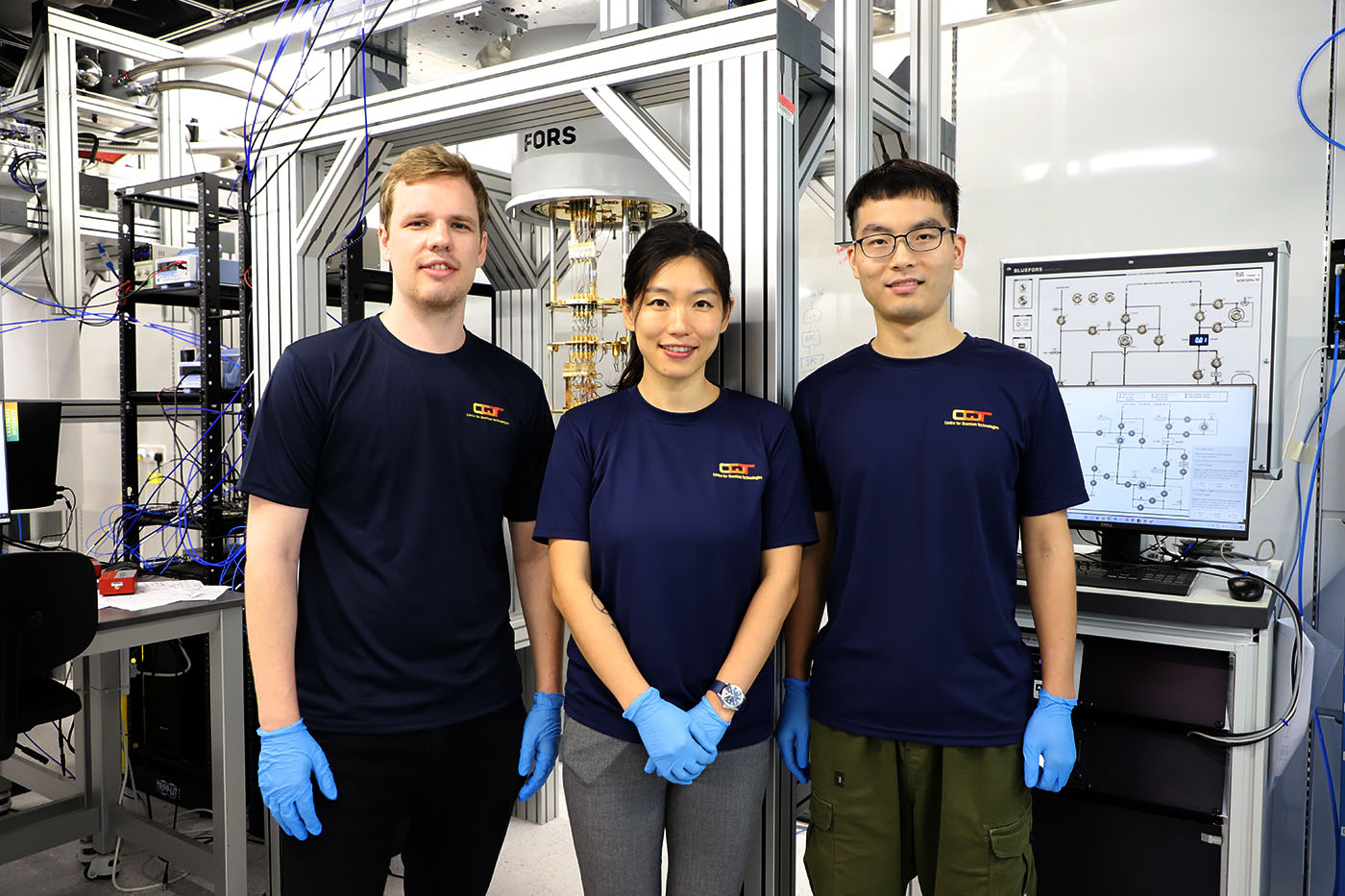
26 CQT graduates for 2026! Nine graduates attended commencement in person to collect their degrees.
We congratulate our new graduates! Twenty-six graduates from the Centre for Quantum Technologies’ PhD programme officially received their degrees at a National University of Singapore (NUS) commencement ceremony on 15 July. This is the largest batch of graduates since CQT was established in 2007. Nine students attended the ceremony in person.
The full list of CQT graduates who defended their theses in this academic year is included below.
While they were at CQT, some graduates did foundational research, including Peter Sidajaya who worked on Bell nonlocality and Nie Hanlin who researched quantum-controlled thermodynamics and information processing.
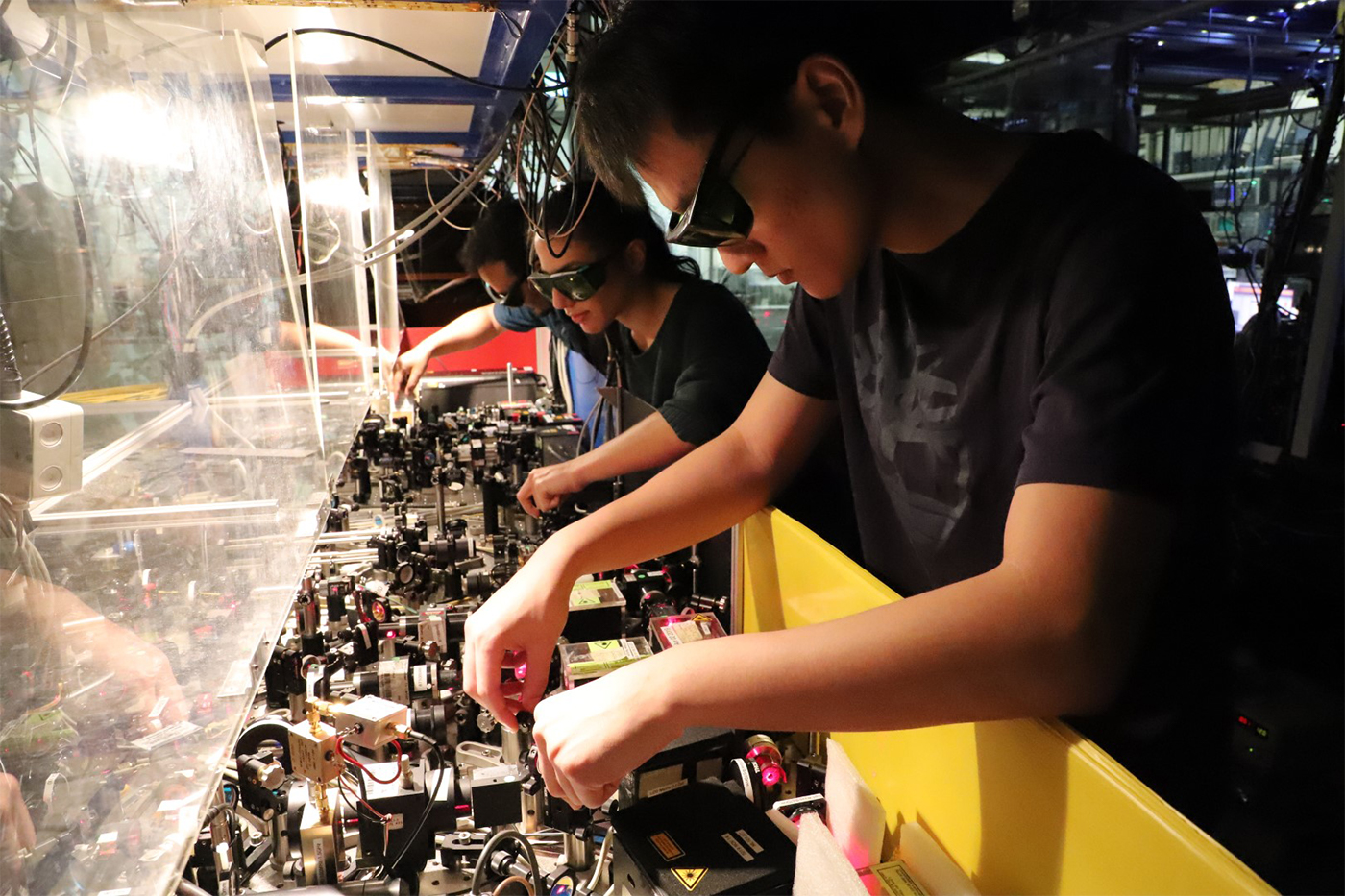
Others were involved in cutting-edge experiments. Du Jinyi was part of a team that designed and trialled a record-breaking photonic chip on Singapore’s deployed fibre network, while Victor Avalos worked with team members to pioneer a technique that makes ultracold molecules with unprecedented efficiency. Meanwhile Zhao Qi, Qin Qichen and Zhang Zhao were pushing the limits of precision metrology as part of CQT’s lutetium clock project.
This year’s cohort also celebrated an extra milestone: Jonathan Schwinger is the first student to graduate from Principal Investigator Yvonne Gao’s group. Jonathan contributed to research on quantum computing with cat states. He now works in Singapore at Horizon Quantum.
Other graduates have also started in new roles. Some remain in academia as Research Fellows, such as Harshank Shrotriya at CQT and Roberto Rubboli at the University of Copenhagen. Some have taken on new challenges in industry: Lu Tiangao joined Huawei Singapore’s quantum cryptography research team while Fernando Valadares joined Nord Quantique in Canada to work on bosonic superconducting circuits for quantum computation.
We wish our graduates all the best! We encourage our alumni to stay connected and share their career stories.
Prospective students interested in pursuing a PhD at CQT can find more information on our website. Options for support include the National Quantum Scholarships Scheme, where PhD students at CQT matriculate at one of NUS, the Nanyang Technological University, Singapore or the Singapore University of Technology and Design.
PhD Graduates 2026
Du Jinyi
Silicon Chip-based Polarization Entanglement: Generation, Optimization, And Long-distance Distribution
Advised by Alexander Ling
Enrique Cervero Martin
Cryptography With Untrusted Quantum Devices: Near-term And Beyond
Advised by Marco Tomamichel
Fernando Valadares Calheiros De Siqueira
Dynamical Light-matter Coupling With Protected Superconducting Oscillators
Advised by Yvonne Gao
Gan Beng Yee
Foundations Of Near-term Quantum Machine Learning: Expressivity, Classical Learnability, And Generalization Ability
Advised by Patrick Rebentrost
Harshank Shrotriya
Quantum Nonlocality: Manifestations And Applications
Advised by Kwek Leong Chuan
Hu Yanglin
Quantum Oblivious Transfer: Bounds And Applications
Advised by Marco Tomamichel
Jasper Phua Sing Cheng
Algorithm Based Characterization Of A Single Ion Qudit
Advised by Manas Mukherjee
Jonathan Schwinger
Engineering Robust And Entangled Cat States In Superconducting Bosonic Circuits
Advised by Yvonne Gao
Josep Lumbreras Zarapico
Bandits Roaming Hilbert Space
Advised by Marco Tomamichel
Kim Mu Young
Construction And Characterisation Of A Three-qubit Trapped-ion Quantum Computer
Advised by Dzmitry Matsukevich
Li Putian
Sub-Doppler Cooling and Optical Trapping Of Indium
Advised by Travis Nicholson
Li Yifan
Correlated Photon Pairs And Multiphoton States From A Cold Atomic Ensemble
Advised by Christian Kurtsiefer
Li Zeyong
Poking The Complexity Of Range Avoidance
Advised by Divesh Aggarwal
Lu Tiangao
Optical Properties Of Quantum Materials
Advised by Gong Jiangbin, co-advised by Li Xinwei
Nie Hanlin
Quantum-controlled Thermodynamics And Information Processing: Engineered Dissipation And Causal Superposition Of Quantum Processes
Advised by Kwek Leong Chuan, co-advised by Mile Gu
Ng Si Qi
High-performance Silicon Photonic Devices And Integrated System For Quantum Communication
Advised by Alexander Ling, co-advised by Charles Lim and Wang Chao
Park Kun Hee
Engineering Noise-protection In Superconducting Qubits
Advised by Rainer Dumke
Peter Sidajaya
Studies In Quantum Foundations
Advised by Valerio Scarani
Png Wen Han
Studies In Quantum Control And Quantum Information
Advised by Valerio Scarani
Qin Qichen
Fast Sideband Cooling And Blade Trap For Multi-ion Clock
Advised by Murray Barrett
Roberto Rubboli
Optimization And Additivity Of Quantum Relative Entropies
Advised by Marco Tomamichel
Sreedevi Athira Krishnan
Towards Ultracold Fermions In 2D Disordered Optical Lattice
Advised by Kai Dieckmann
Victor Andre Avalos Pinillos
Control And Detection Of 6Li40K Ground State Molecules
Advised by Kai Dieckmann
Zhang Xingjian
Deployed Quantum Key Distribution With A Room-temperature Telecom Single Photon Source
Advised by Alexander Ling
Zhang Zhao
Development and Absolute Frequency Measurement of a Lutetium Clock
Advised by Murray Barrett
Zhao Qi
Ion Trap System Towards 176Lu+ 3d2 Clock Transition
Advised by Murray Barrett
Related Stories

2 December 2025
Bright photonic chip could power quantum networks
Singapore researchers demonstrate entanglement distribution from the chip over 155km