Quantum Hackamonth status: complete
Participants at CQT’s inaugural hackamonth worked on open problems in quantum algorithms
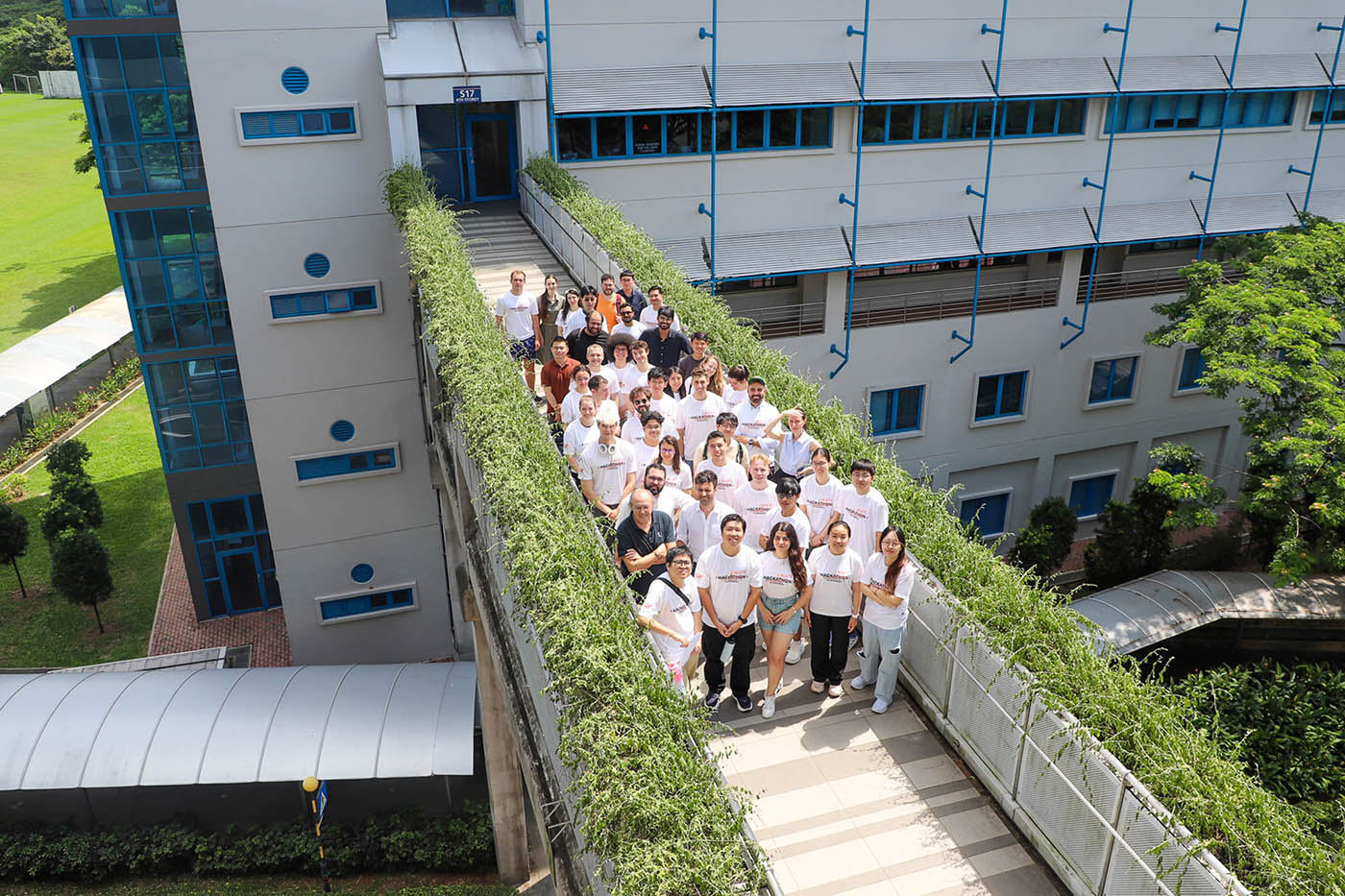
PhD students and postdocs travelled from 12 different countries to join CQT’s Quantum Hackamonth in sunny Singapore.
It’s a wrap for the Centre for Quantum Technologies’ first ever Quantum Hackamonth. The event held 1-26 June brought together some 40 early-career researchers to collaborate on quantum algorithms.
“There are so many exciting projects to work on and so many great people to talk to at CQT that one could work here forever,” said PhD student Oxana Shaya, participating from Leibniz University Hannover in Germany.
Unlike a typical hackathon, which invites coders to work intensely over a few days towards prizes, the Hackamonth was conceived to encourage thoughtful collaboration over weeks. The participants were 29 international PhD students and postdocs, selected from over 150 applicants, and seven Singapore-based researchers.
The participants were given freedom to form small teams and choose problems to work on, building from open problems put forward by the event’s mentors. The effort has already led to at least one paper submitted to the preprint server arXiv.
CQT organised the Hackamonth in support of the Quantum Software Alliance, a global network of research institutions focused on making quantum computing practical through software. CQT is a founding member. The Hackamonth was supported by QAI Ventures, Quantinuum and Singapore’s National Quantum Computing Hub.
A space for exploration
“I think we created a space where there was enough freedom to explore and fail and try brave ideas. Exploration could happen at a fast pace because you have access to experts in other domains that are there with you,” said Alessandro Luongo, who co-organised the camp with Sergi Ramos-Calderer. Both are Research Fellows at CQT working for the National Quantum Computing Hub and served as mentors for the Hackamonth participants.
The mentoring team also included Carlos Bravo-Pietro from Freie Universität Berlin, Germany; Supanut Thanasilp from Chulalongkorn University, Thailand; Irfan Khan from Quantinuum and CQT researchers Itai Arad and Lirandë Pira.
Supanut, a graduate of CQT’s PhD programme, was recruited to the event after supporting one of his own students to apply. “It’s like coming back home to me,” he said.
He gives credit to the participants for finding a good problem to work on. After he proposed a project using instantaneous quantum polynomial-time circuits for quantum optimisation, he explains, “It got partially scooped because we found a much older paper that solved it, so a participant suggested instead let’s try thermal state preparation.” This problem is about using a quantum computer to mimic nature, forcing a quantum system into a stable, specific temperature state to simulate and study complex materials.
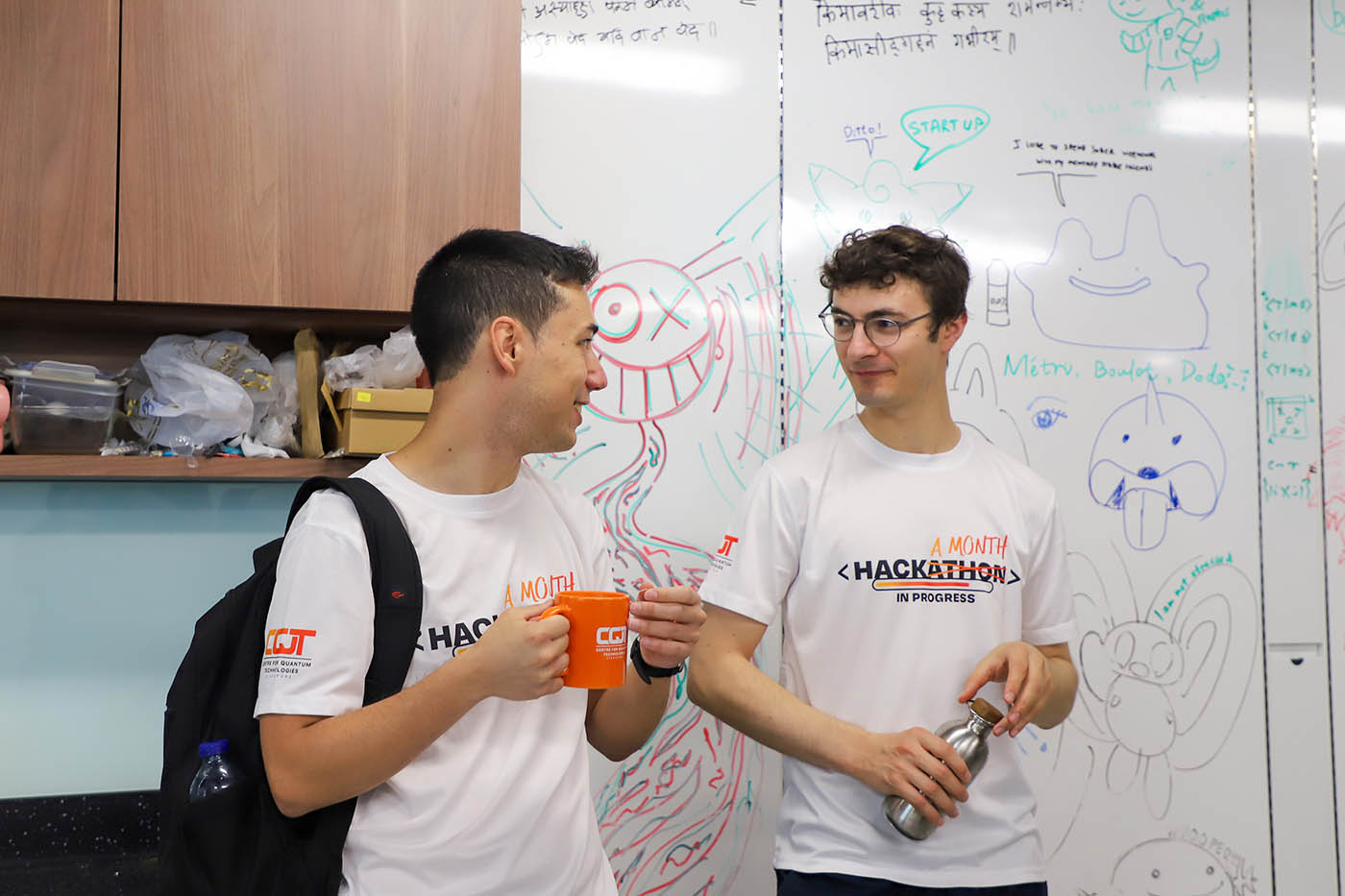
We can hack it
The Hackamonth programme offered daily science talks and weekly social activities, including meals at Singapore’s hawker centres, football and sight-seeing. While the formal programme has ended, the participants will stay connected. Many teams plan to continue to work on the problems they adopted towards outcomes such as co-authored papers and conference presentations.
One paper is already out from participant María Gragera Garcés, a PhD student at the University of Edinbugh, UK and mentor Lirandë. They worked on a primitive relevant for machine learning (ML), releasing the preprint “Quantum ring all-reduce: communication and privacy advantages for distributed learning” to arXiv on 18 June.
Announcing the work on LinkedIn, María wrote: “This is quite exciting because our results point to the fact that quantum technologies can deliver advantages in large scale ML training— contributing to what some, like Lirandë, would call the scientific question of the century: ‘How can we train learning models faster?’.”
In person, María added, “I think I would have never known about the application without coming here. The whole hackamonth has been very nice. Everyone vibes in the room and we code together, with a bunch of caffeine to power us through.”
Other projects participants are working on include algorithms for quantum error correction and novel techniques for the dequantization of quantum algorithms.
Browser not supported
Modern websites need modern browsers
To enjoy the full experience, please upgrade your browser
Try this browser