Meet a CQTian: Hu Mengyao
Mengyao, who works on Bell nonlocality in many-body quantum systems, has received the CQT Alice Postdoctoral Fellowship
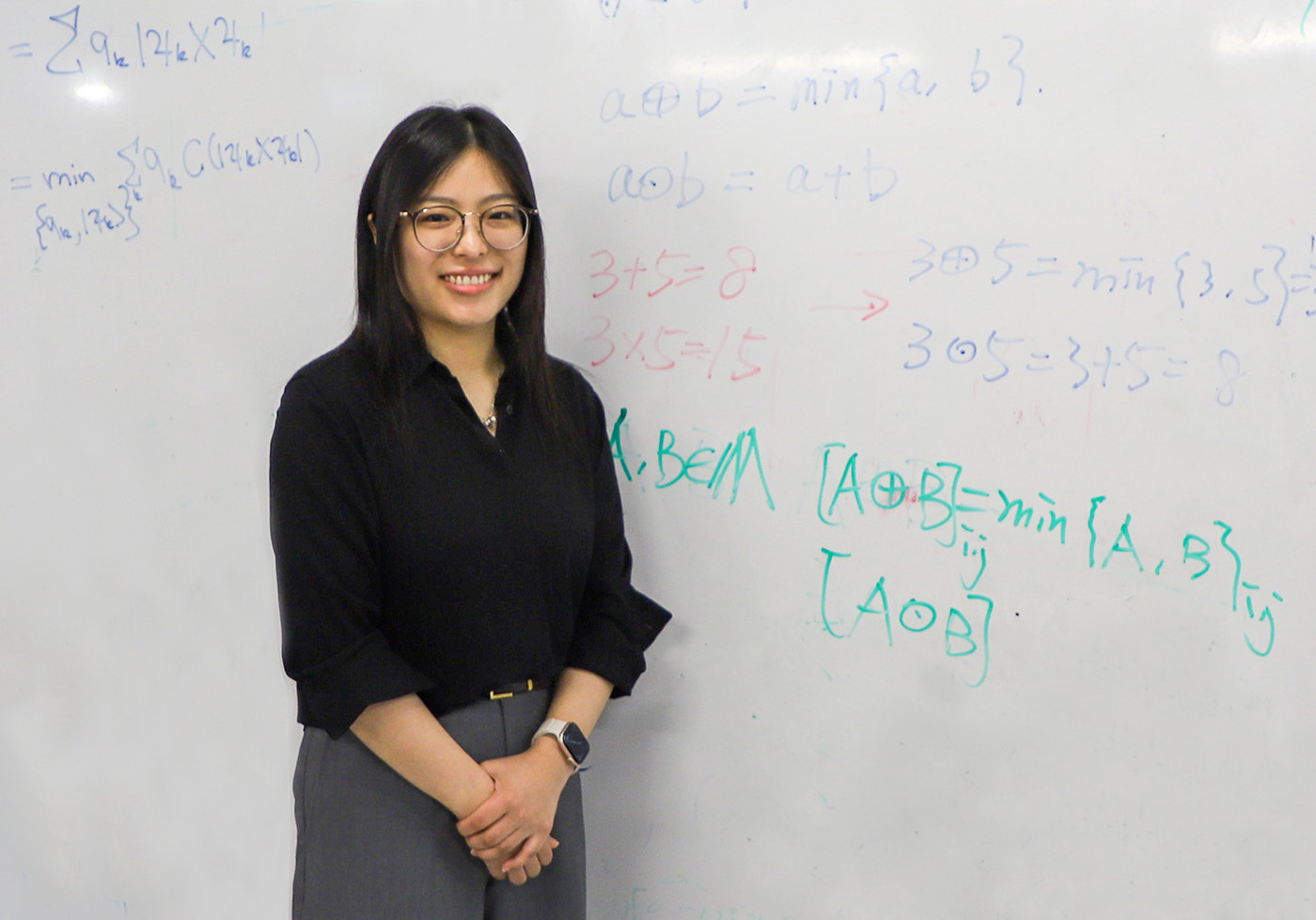
Meeting members of Principal Investigator Valerio Scarani’s group at a workshop motivated Mengyao to apply to CQT.
Who are you and how did you arrive at CQT?
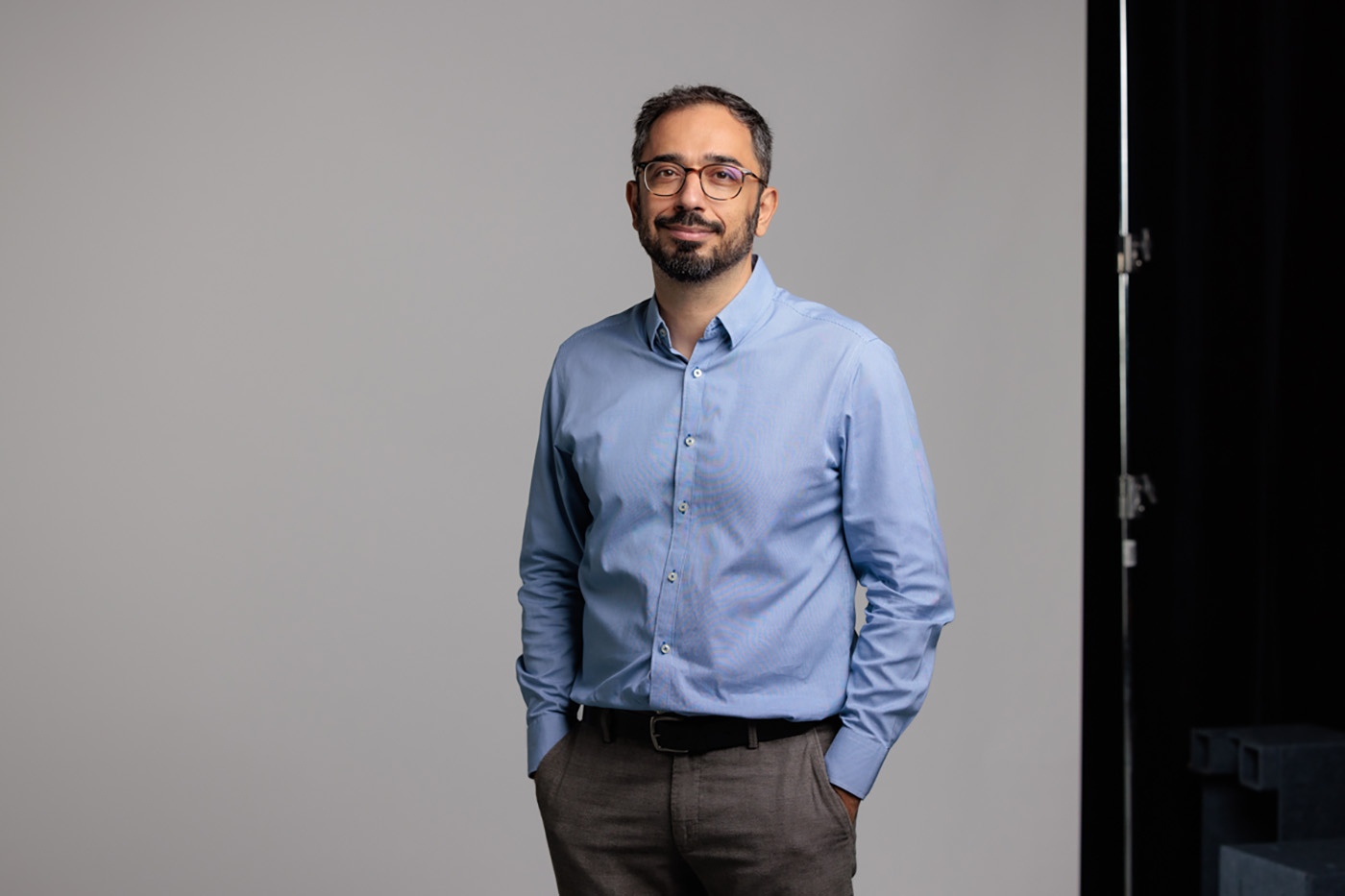
I’m Mengyao and I’m from China. I just started at CQT at the beginning of the year in Valerio Scarani’s group, after finishing my PhD at Leiden University in the Netherlands.
I chose to come to CQT because it is strong in both theory and experiments. Since my work focuses on Bell inequalities and many-body physics, I wanted an environment where I could develop new mathematical tools while staying closely connected to what can be tested and implemented in practice.
You met Valerio and his group before joining CQT, is that right?
Yes, the more personal story is that I met Valerio and some members of his group at a workshop in Hong Kong last year. I knew of Valerio for a long time as one of the experts in Bell nonlocality and I read his papers. At the workshop, I chatted with some of his group members and felt it was exactly the group I’d like to join. The group was open, collaborative and fast-moving. That conversation motivated me to apply and I was happy to eventually receive the offer.
What is your reaction to receiving the CQT Alice Postdoctoral Fellowship, which will support you for two years?
I am really surprised and very grateful. Receiving the prize is incredibly motivating because I feel like my work is being recognised. I appreciate that the prize supports young women researchers in our field. I’m thankful to Valerio who nominated me and my PhD supervisor Jordi Tura at Leiden University, and to the collaborators and mentors who have supported me along the way.
What is your research about?
My research is on many-body Bell nonlocality, with an emphasis on Bell inequalities as scalable tools for certifying genuinely quantum behaviour in large quantum devices. As quantum processors grow beyond the regime where classical computers can efficiently simulate them, a key question becomes: how can we verify that a purported quantum device is truly operating in a nonclassical way?
To address this, we develop efficient methods to characterise and optimise many-body Bell inequalities, aiming to provide stronger and more scalable certification protocols for large-scale quantum systems.
When did your interest in quantum start?
My background is actually in mathematics. I love precise structures and proofs, and quantum theory is a place where mathematics is essential.
When I started to learn quantum, I was trying to solve mathematical problems in quantum information theory that I found interesting. I was drawn to how quantum theory reshapes what measurement and information mean, while motivating technologies.
What do you enjoy most about your work?
I love the moment when a problem suddenly becomes clear. Once I had been working on a project for two and a half years, characterising and optimising many-body Bell inequalities using tropical algebra. When I finally found the right perspective, everything clicked.
Is there anything you do not enjoy?
The least enjoyable part is the slow, detail-heavy side of research – things like debugging code or deciding on the right notation to use. But this is necessary for the work to be correct and readable. I try to handle this efficiently and systematically so that I can quickly get back to the conceptual side which is more creative.
What do you do outside of work?
I like staying active. I do yoga and Zumba and I also like playing badminton and tennis. I feel these activities help me reset and keep a good rhythm. I also meditate almost every day. It is a simple way to refresh my mind and come back with better focus.
Related Stories
3 September 2025
Alice prizes debut at CQT with four recipients
CQT launched the prizes in 2025 to address the under-representation of women in quantum technologies