New SpeQtre satellite to communicate with CQT ground station
The satellite launched by Singapore startup SpeQtral and UK collaborator RAL Space builds on space heritage from CQT
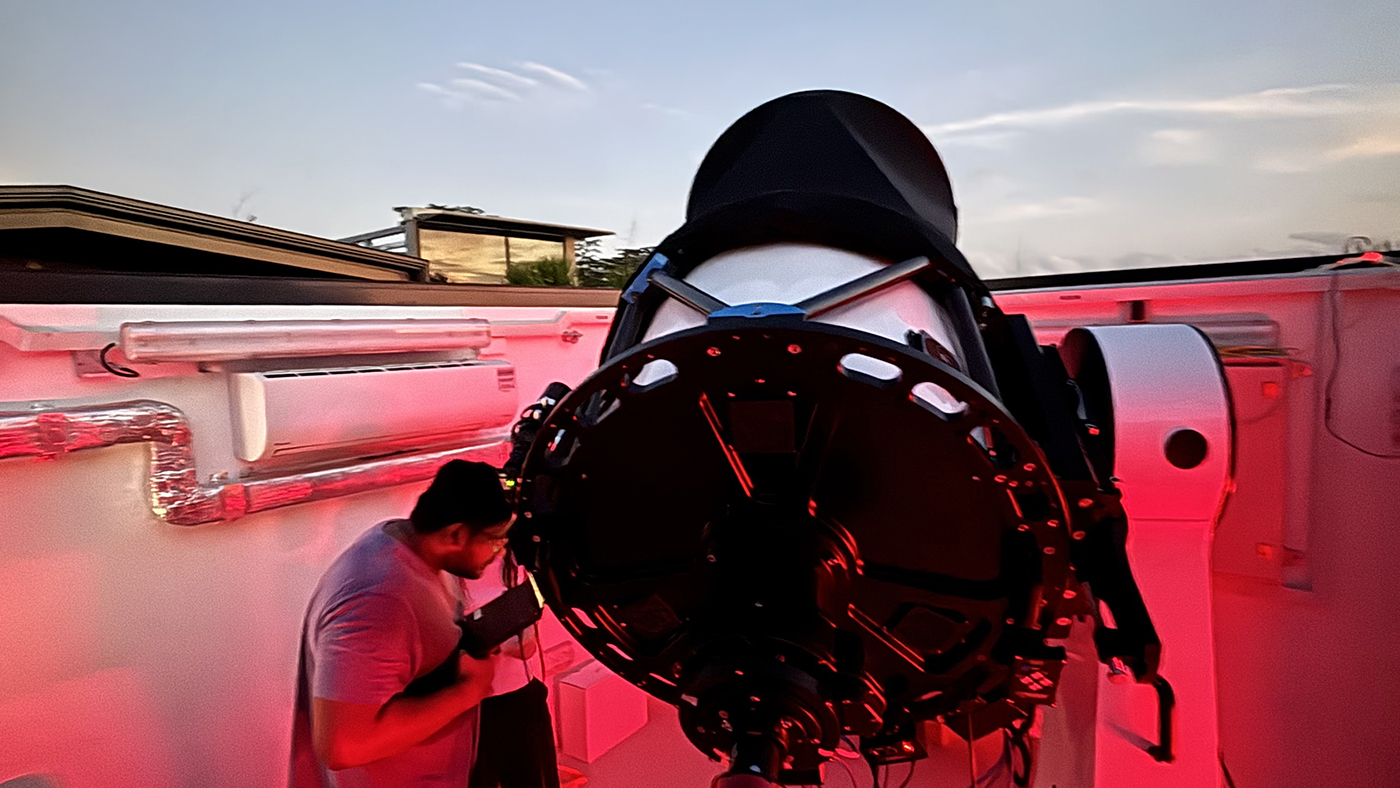
CQT researchers have commissioned an optical ground station in Singapore to receive quantum signals from the satellite SpeQtre and other future missions. Image: CQT/NUS.
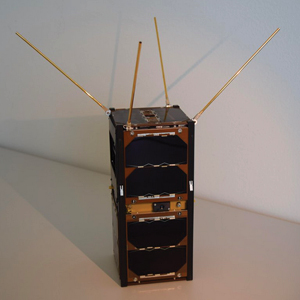
SpeQtral, a quantum communications company that spun out from the Centre for Quantum Technologies (CQT) in 2017, has launched its first satellite in partnership with the UK Science and Technology Facilities Council’s (STFC) RAL Space. The spacecraft was launched from the US and deployed into orbit on 28 November.
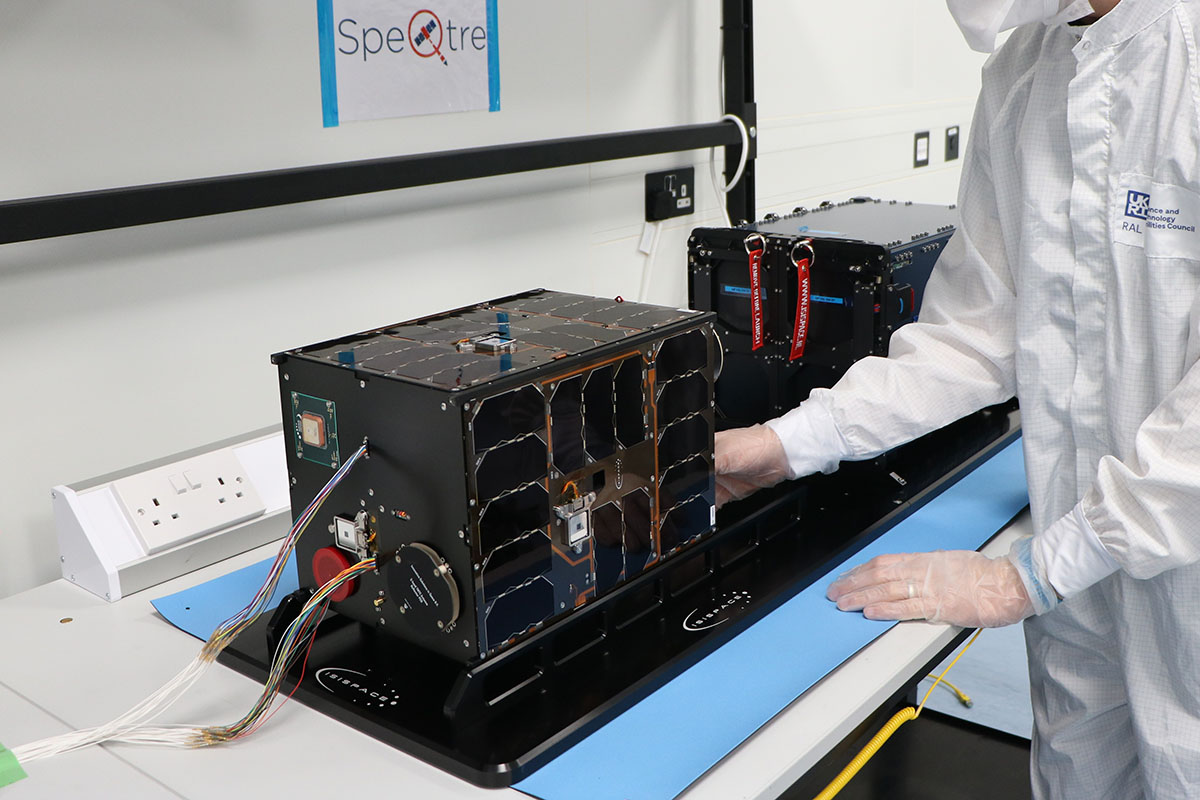
The SpeQtre satellite carries advanced quantum hardware designed by SpeQtral to explore secure space-based quantum communications. It aims to demonstrate the exchange of quantum information from a CubeSat roughly the size of a microwave oven. Satellite-based quantum communication could overcome the distance limitation on quantum signals inherent to fibre networks.
Experts from RAL Space developed the instrument that will beam SpeQtre’s quantum signals to Earth, assembled the satellite hardware and ensured its readiness for space using their suite of environmental test facilities.
“This mission represents years of collaborative development between our teams,” said Chune Yang Lum, CEO of SpeQtral. “We’re taking a systematic approach that validates each aspect of the technology step by step, building toward increasingly ambitious quantum communications capabilities.”
SpeQtre’s SpooQy history
The collaboration has roots stretching back to teams at CQT. Chune Yang was CQT’s Head of Industry Relations when he co-founded SpeQtral with CQT Principal Investigator Alexander Ling and then Senior Research Fellow Robert Bedington, now the company’s Chief Technology Officer.
Alexander had pioneered the idea of using CubeSats for quantum communication with collaborator Daniel Oi from the University of Strathclyde in Glasgow, UK, starting from around 2010. The team designed compact quantum entanglement sources that flew first on a weather balloon, survived a failed satellite launch in 2014, then reached orbit in 2019 in a satellite CQT built itself: SpooQy-1.
Meanwhile, the CQT team had begun to collaborate with RAL Space in 2018, later handing on the project to SpeQtral to allow a longer development timeline. The mission was initially known as the QKD Qubesat.
The SpeQtre collaboration is now part of the Space Technology Development Programme administered by the Office for Space Technology & Industry (OSTIn), Singapore’s national space office, and the National Quantum Technologies Programme administered by UK Research and Innovation.
One person who witnessed this journey from the start was Artur Ekert, inventor of entanglement-based quantum communication and CQT Director from 2007 to 2020. Still a Professor, he is now also Chief Scientific Officer and a Board Member for SpeQtral.
Artur says, “When we celebrate SpeQtre’s success, we should remember that this milestone rests on foundations laid at CQT back in 2010, when two young researchers, Alex Ling and Daniel Oi, first conceived the idea and made the hardest leap — from zero to one. They did so without fanfare or press releases, at a time when it was not even clear the whole thing would fly (pun intended). All kudos to them!”
Steps to quantum communication
Radio contact has already been made with SpeQtre but its different systems must now be commissioned one by one. The satellite’s pointing systems will be switched on and tested before the teams activate the quantum instruments. Following the commissioning phase, quantum communications experiments are expected to begin in early 2026.
The mission will start by conducting experiments with quantum-enabled optical ground stations in the UK and in Singapore. The Singapore ground station is operated by CQT and is located on a rooftop in the National University of Singapore campus. The UK ground station is at RAL Space’s Chilbolton Observatory.
Data from the experiments will allow for demonstrations of secured communications between the two sites and inform development of future commercial quantum communications satellites.
CQT researchers have worked many nights to ready the Singapore ground station, preparing for its 60 cm telescope to track SpeQtre across the sky and receive its quantum signals with single-photon resolution.
“It was a journey of ups and downs, but grit and talent got us all here. Congratulations to the whole team for pulling this through. The next few months will be very engaging and full of lessons to be learned,” says Alexander.
Related Stories
25 June 2020
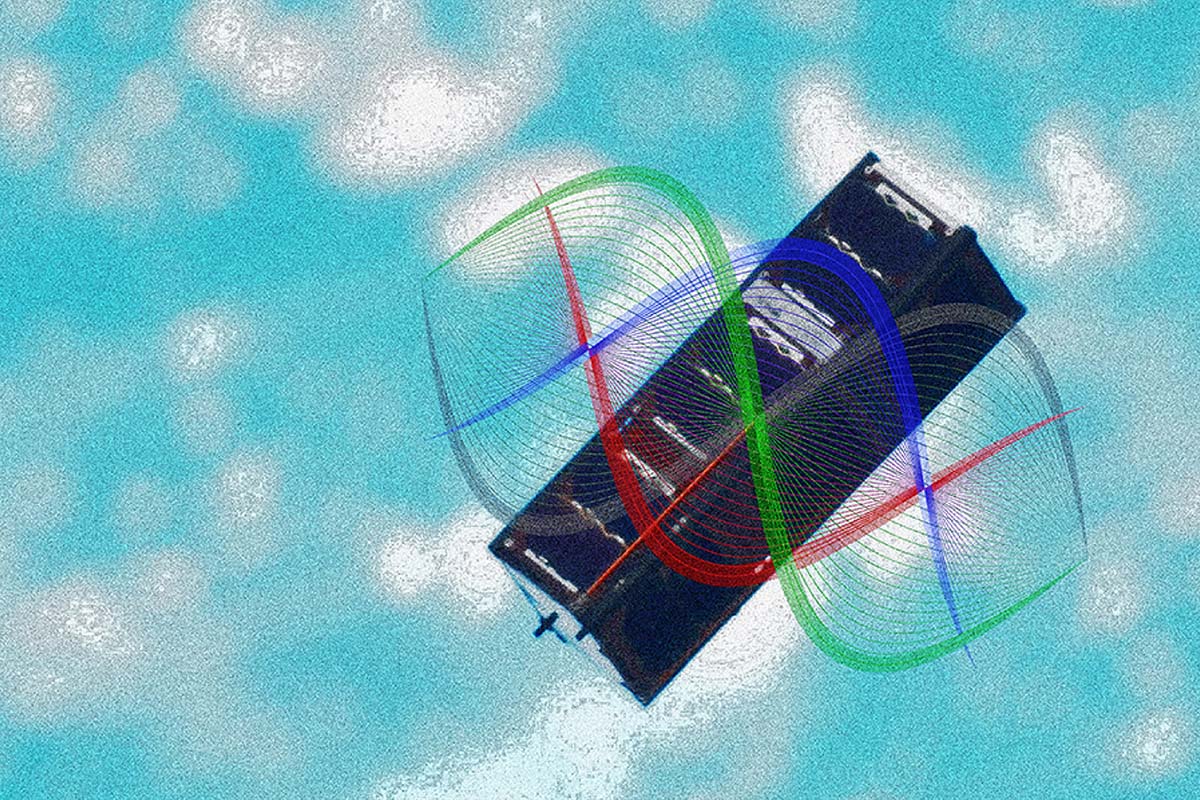
SpooQy-1 shows promise of nanosatellites for quantum networks
Scientific data from the 2.6kg, shoebox-sized satellite confirm the creation of entangled signals in orbit