Meet a CQTian: Antonios Varvitsiotis
CQT Fellow Antonios is working on optimisation problems from classical and quantum AI
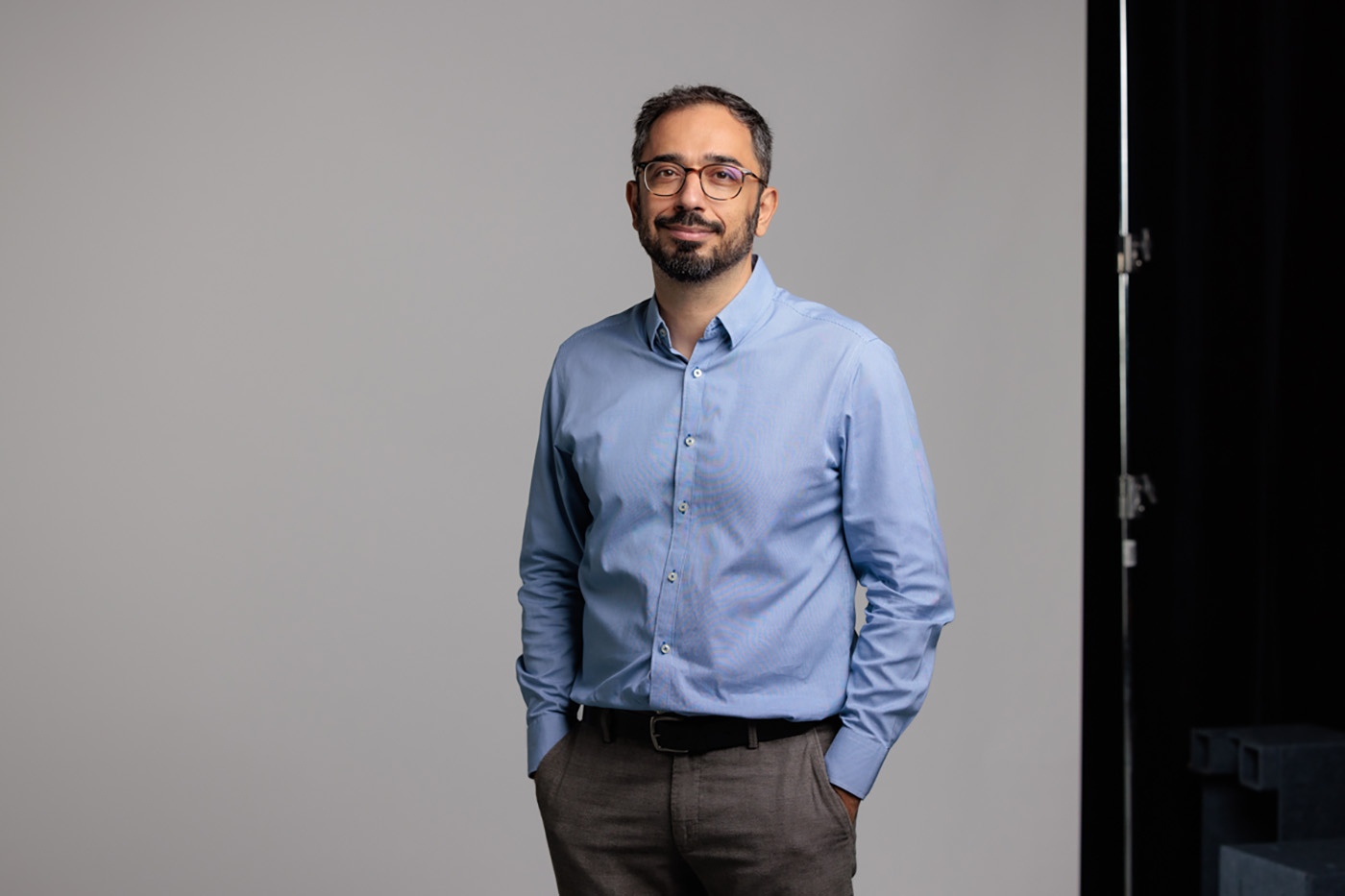
Now faculty at the Singapore University of Technology and Design (SUTD), Antonios was previously a postdoc at CQT. He has a background in mathematics, theoretical computer science and optimisation.
Who are you?
I’m from Greece and I did my PhD in Mathematical Optimisation at the the Dutch National Research Institute for Mathematics and Computer Science (CWI). I came to Singapore in my third year of my PhD to visit the Institute for Mathematical Sciences at the National University of Singapore (NUS). I loved Singapore and when the time came for a postdoc, an opportunity came to join CQT under Troy Lee, then a CQT Principal Investigator (PI). I was with the Computer Science group at CQT as a postdoc for about four years before I found a position with SUTD in September 2019.
How did you get interested in quantum?
During my PhD, I was working in the “Networks and Optimization” group at CWI. But just down the corridor from where we were, there was the “Algorithms and Complexity group” where many PIs were working on quantum computing. In the last two years of my PhD, the two groups started interacting more actively. That was when my supervisor and I realised that there are cool optimisation problems in the general area of quantum.
What are you working on now?
My group works on optimisation problems that come up in both classical and quantum AI. A helpful way to organise this landscape is along two axes: classical vs quantum, and single-agent vs multi-agent settings.
Consider a commuter traveling from home to work through a traffic network. Their goal is to choose a route that minimises travel time. To do this, they solve an optimisation problem using estimates of travel times on each road segment, estimates that are uncertain and typically learned from data. This single-agent viewpoint is the canonical optimisation model we teach in introductory courses, and it underpins many textbook applications such as vehicle routing, scheduling, and portfolio optimisation.
A central planner, however, often asks a different, population-level question. The network consists of many commuters, and the travel time on any road segment depends on how many people choose to use it. In a single-agent model, the behaviour of others is folded into the environment as an exogenous factor; in a multi-agent model, other commuters are treated explicitly as decision-makers. Each commuter is still trying to minimise their own travel time, but the optimisation problems they face are coupled: what is best for one depends on what everyone else does. In the multi-agent setting, the central question becomes: what will be the state of traffic when everyone optimises at the same time? This perspective is essential for predicting collective outcomes and for designing interventions such as pricing, incentives, or information policies. Beyond transportation, the multi-agent lens is central in markets and auctions, platform design, distributed energy systems (smart grids), and multi-robot coordination.
Some of our recent work focuses on systems of quantum agents, which we define (loosely) as entities, e.g., devices, that can store, manipulate, and exchange quantum information. When multiple such agents interact, they form a quantum multi-agent system. We view our research along two complementary directions, depending on whether intervention is possible. If it is not, the goal is to model incentives and predict the behaviours the system will exhibit, often equilibria or other stable regimes, and to evaluate their efficiency, stability, and fairness. If intervention is possible, the focus shifts to mechanism design: shaping the rules of interaction so that the resulting behaviour leads to desired/improved system-level outcomes.
Has anything changed for you since becoming a CQT Fellow?
Not much. I was coming to the CQT@NUS node pretty often already because I have many collaborators here. But I am looking forward to hiring more students so that I can really have more of a grounding here.
What do you enjoy about your work?
I like the intellectual curiosity and learning new things. Every second or third paper I write tends to be in a new direction – that is my sneaky way to learn more. I was lucky enough to have learnt many interesting things along the way. My first degree was in mathematics, my Master’s in theoretical computer science, my PhD in optimisation and then I came to CQT.
What do you enjoy outside of work?
I have a daughter and she’s five. These days I enjoy what she enjoys, which at the moment includes KPOP Demon Hunters and drawing. I used to play music – I play the guitar, bass and drums.
Related Stories
21 May 2025
CQT expands national footprint with new appointments
The Centre welcomes five new research groups and enhances support for two existing group leaders